Pest Library
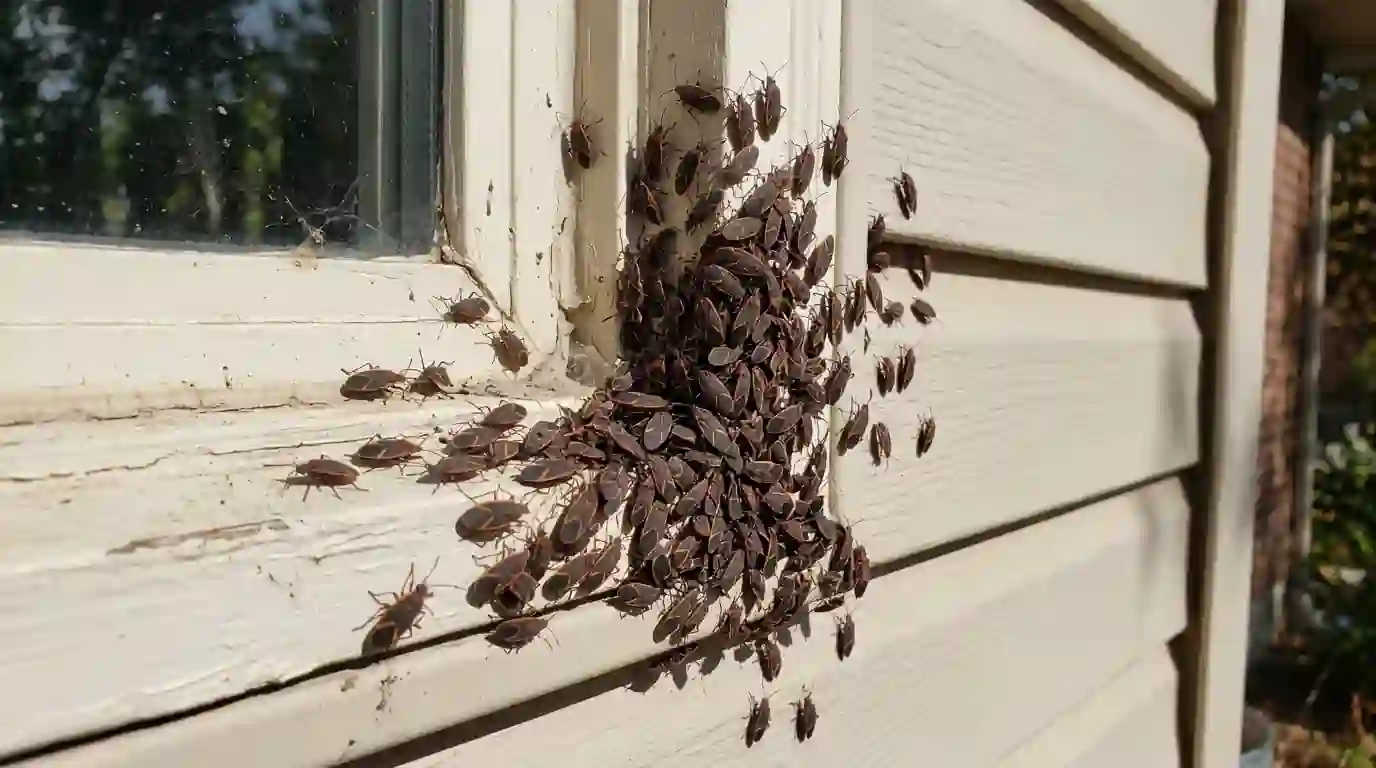
Why boxelder bugs cover south walls every September
They're harmless, but thousands at once on the siding get attention. Here's why boxelder bugs pick the south wall, and the short window to stop them getting in.
By Alvin Fairbanks, Pest Control Guides Editor
Updated September 2026 4 min read
Short answer
Boxelder bugs gather on south-facing walls in August and September because the sun-heated siding keeps them warm. From there they push into gaps around windows, siding and attic vents to spend the winter. Treating those walls and sealing the gaps in mid to late August works far better than vacuuming them off windows in spring.
What boxelder bugs are
Boxelder bugs are half-inch black insects with red markings along the edges of their wings. They don't bite people, don't breed indoors and don't damage the house. Their only real harm is numbers, and the stains they leave when crushed.
Outdoors they feed on seeds and plant juices, which is why homes near certain trees see so many more of them.
Why the south wall
In late summer, boxelder bugs start looking for somewhere to spend the winter. South and west walls soak up the afternoon sun, and the bugs cluster on them to stay warm.
Every gap around window trim, siding joints, soffits and attic vents on those walls becomes a doorway into the wall voids and attic where they'll sleep through the cold.
USU Extension describes boxelder bugs gathering in large numbers on south-facing, sun-heated walls in August and September before pushing indoors to overwinter. In Utah they feed on maple, ash, stone fruit, apple, grape and grass, and they're known for going after ripe peaches, which is why neighborhoods with mature maples and fruit trees see the heaviest waves. A single tree on the block can supply bugs to every house around it.
Why they turn up inside in winter and spring
Bugs that got into the walls don't stay put. On warm winter days and in early spring they wake up and wander toward the light, which puts them on sunny windows and in light fixtures long after the fall invasion.
That's the moment most people notice the problem, and it's also the hardest time to fix it.
What works
Timing is everything. The best results come from treating the sunny walls and sealing gaps before the bugs move inside.
- Book a wall treatment for mid to late August
- Repair torn window screens and weather stripping on sunny sides
- Seal gaps around trim, siding joints and attic vents
- Vacuum bugs indoors and empty the vacuum outside
What doesn't
Cutting down a host tree rarely helps, because boxelder bugs fly in from nearby trees. Crushing them leaves stains on light walls and fabric, and indoor foggers don't reach the wall voids where they're hiding.
Sources
No. They're a nuisance, not a danger to people or pets.
No. They don't chew wood or breed indoors. Crushed bugs can stain fabric and light walls.
Mid to late August, before they move from the walls into gaps.
Bugs that wintered in the walls wake up on warm days and head for the light.
It rarely solves the problem, since bugs fly in from nearby trees.
Vacuum them and empty the vacuum outside.
Keep reading
More from the Pest Library
Quarterly pest plan or one-time treatment?
How to decide which fits your home, your pests and your budget.
Read the articlePest LibraryHobo spider or black widow? Telling Utah house spiders apart
Which spider in the window well actually matters, and what to do about each.
Read the articlePest LibraryMice and the first freeze: sealing a Salt Lake home in October
The gaps mice use when nights drop toward freezing, room by room.
Read the articleTalk to us
South wall turning red and black?
Call now to treat the walls before the bugs move in for winter.
Homes, rentals and businesses across Salt Lake, Davis, Weber, Box Elder, Morgan, Tooele and Utah counties.
