Spiders, ants & crawling insects
Elm seed bug control in Salt Lake City, UT
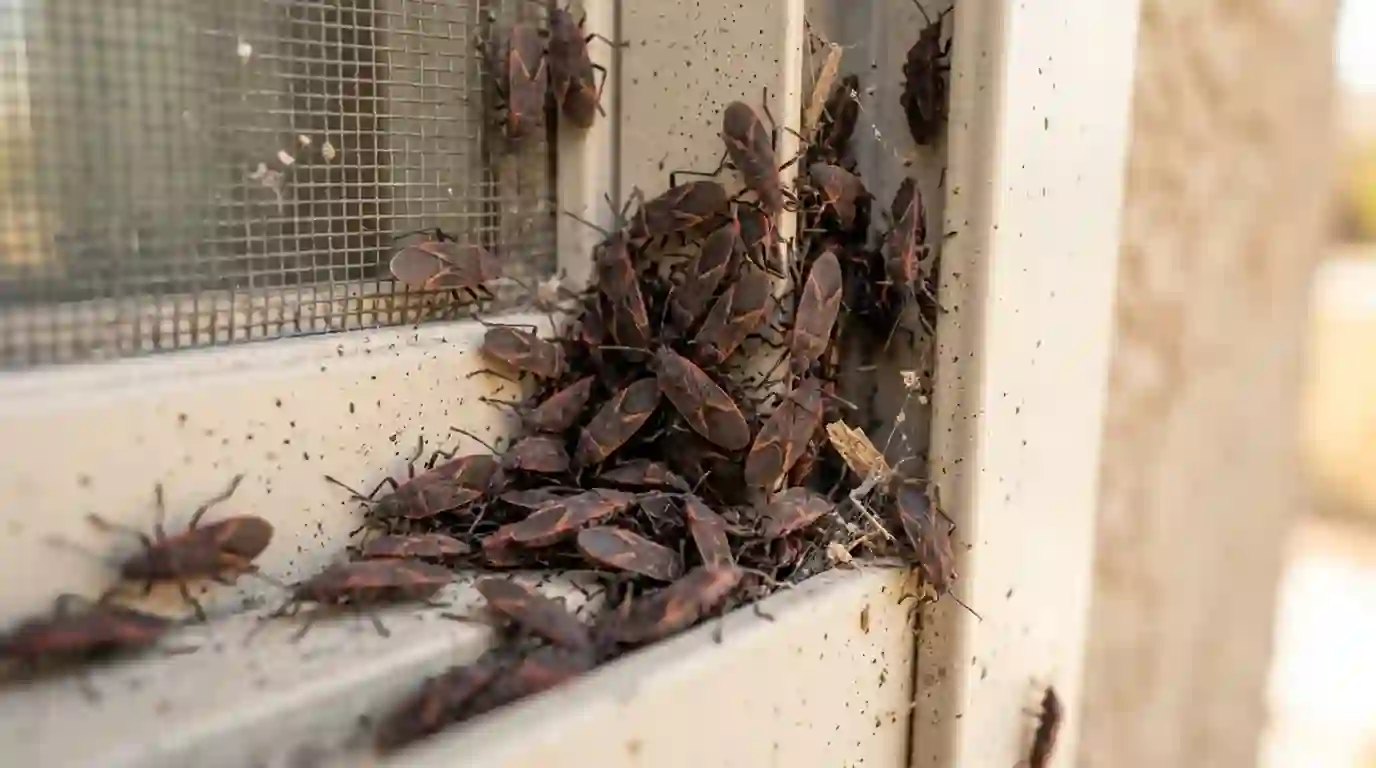
Red and black bugs covering the hot west wall in July, then turning up on the kitchen counter. Elm seed bugs are Utah's newest nuisance pest, and they peak in mid-summer, not fall.
Most active
- Spring
- Summer
- Fall
- Winter
Quick answer
Elm seed bugs are small red and black bugs that feed on elm seeds and pour onto warm walls, then into homes, from late May through September, peaking in mid-summer heat. They don't bite or damage the house, but they smell like bitter almonds when crushed. Control means a residual treatment along the foundation, windows, doors and eaves, plus sealing the gaps they use to get in.
At a glance
- Best for
- Swarms on sunny walls and bugs coming indoors in summer
- Peak season
- Mid-summer, late May through September
- How it works
- Foundation, window and eave treatment plus sealing
- Follow-up
- A spring visit before the invasion starts
Overview
A newer pest that behaves differently
Elm seed bugs look a lot like boxelder bugs, but they're smaller, with a red and black pattern on the wings and a red underside. They feed mostly on the seeds of elm trees, and neighborhoods with Siberian elms along fences and alleys see the most of them.
The big difference is timing. Boxelder bugs are a fall problem; elm seed bugs come indoors during the hottest weeks of summer, looking for shade, and again as they look for winter shelter. They also give off a sharp almond-like odor when crushed or handled.
Because they're so mobile, sprays alone don't stop them. The best results come from sealing the house and adding a residual treatment on the surfaces they cross to get in.
What it covers
Elm seed bug work we do
Summer swarms on hot walls
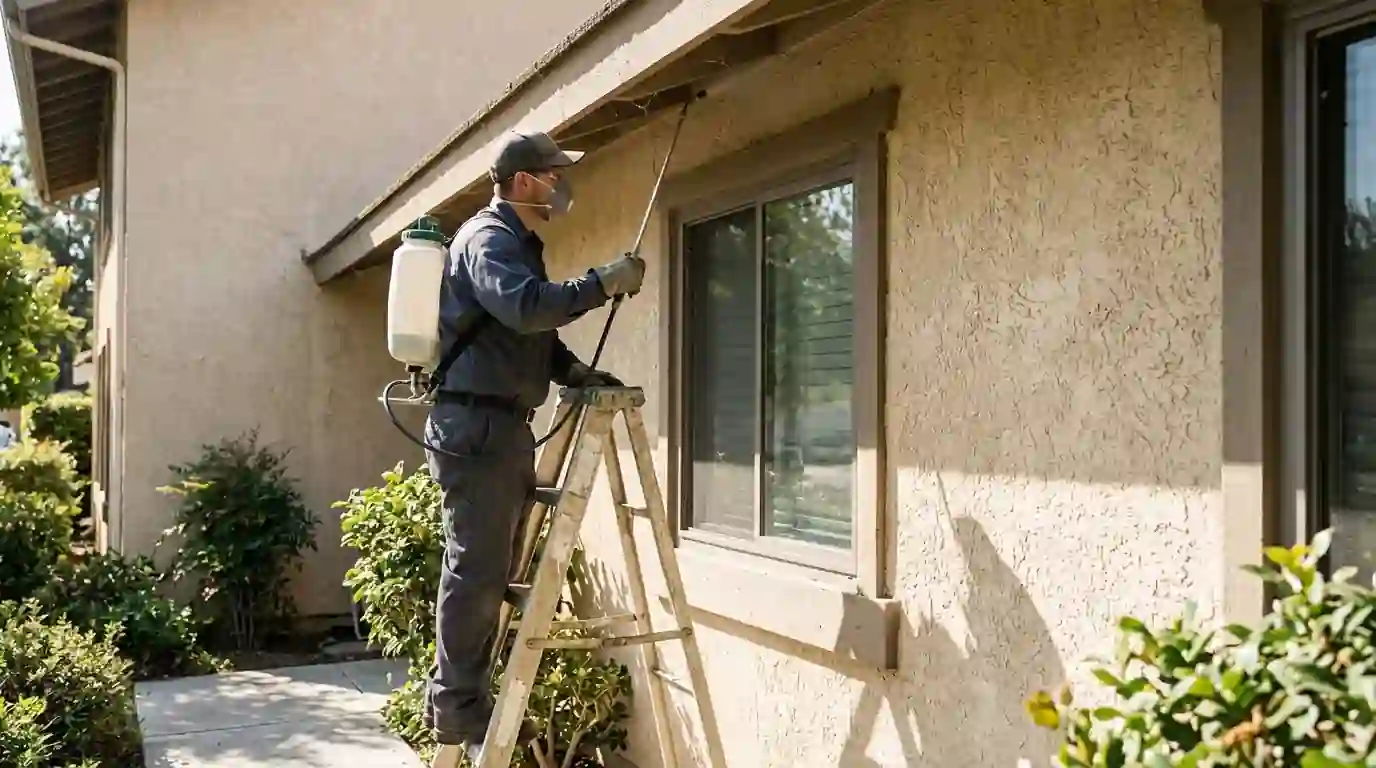
Treatment of sunny walls, eaves and window frames where the bugs gather.
Bugs indoors during heat waves
Help with bugs inside, plus finding the gaps they're using.
Exclusion and sealing
Screens, door sweeps and gaps around windows, siding and vents closed up.
Before we arrive
Before your elm seed bug treatment
- Tell us which walls get covered first.
- Close windows on the day of treatment.
- Point out torn screens and gaps around doors.
- Move patio furniture off the sunny walls.
- Unlock side gates.
- Keep pets inside until treated surfaces dry.
- Note any elm trees on or near the lot.
- Vacuum bugs indoors rather than crushing them.
How the visit goes
How the visit goes
Find the entry points
Windows, doors, eaves, vents and siding gaps on the sunny sides.
Treat the foundation
A residual band along the foundation line.
Treat windows, doors and eaves
Frames, sills and eave undersides where bugs gather and crawl in.
Seal what we can
Gaps around trim, screens and door sweeps.
Plan next season
A spring visit timed before the invasion starts.
Salt Lake conditions
Elm seed bugs on the Wasatch Front
Elm seed bugs were first confirmed in Utah in July 2014 from Salt Lake County, and they're now widely distributed along the Wasatch Front and have been reported as far as Tooele County. USU Extension says they emerge in March, lay eggs in early May and invade homes from late May through late September, peaking in mid-summer rather than fall. They give off a bitter-almond odor when crushed, and pest-proofing the building is the most effective control.
That's why elm seed bug work here starts in late spring, well before the July swarms.
Sources: extension.usu.edu, extension.usu.edu
Warning signs
Signs of elm seed bugs
Sign 01
Red and black bugs on hot walls
Small bugs clustering on sunny walls, especially west and south, in summer.
Sign 02
Bugs indoors in July
Bugs on counters, floors and windows during heat waves.
Sign 03
An almond smell
A sharp bitter-almond odor when bugs are crushed or disturbed.
Sign 04
Elm trees nearby
Siberian elms along fences and alleys supply the seeds they feed on.
Sign 05
Small stains on light surfaces
Droppings can stain light-colored walls and fabrics.
Your options
Elm seed bug options
| Option | Best for | Trade-off |
|---|---|---|
| Perimeter and eave treatment | Most homes | Reduces entry but won't stop every bug |
| Sealing and screens | Every home | Some gaps are high or hard to reach |
| Indoor cleanup | Bugs already inside | Vacuuming, not a long-term fix |
Cost
What elm seed bug control costs
Usually priced like an exterior treatment, with time added for sealing.
Published range
A general exterminator visit typically runs about $100 to $260. Source: angi.com, checked September 2026.
Wall area
Two-story sunny walls and gables take more time.
Sealing work
More gaps around windows and trim add time.
Timing
A late-spring visit is lighter than dealing with a July invasion.
Number of visits
Some homes benefit from a follow-up in mid-summer.
Nearby elms
Heavy pressure from nearby trees means more work.
Do it yourself?
What helps with elm seed bugs
What you can do today
- Repair window screens and add door sweeps with no gaps.
- Rake up elm seeds piled against the house in spring.
- Vacuum bugs indoors, or into soapy water outside.
- Keep windows shut on hot afternoons when swarms are heavy.
What to leave alone
- Crushing bugs on light walls or fabric.
- Relying on indoor foggers.
- Waiting until the peak of summer to seal gaps.
- Leaving screens torn over the summer.
Timing
What to expect
- Same weekBugs on treated walls and frames die off.
- Through summerFewer bugs get in, though some still wander on the hottest days.
- FallA few may look for winter shelter in walls.
- Next springA visit before late May keeps the next season down.
Summer is their season
Unlike boxelder bugs, elm seed bugs peak in mid-summer. A late-spring visit gets ahead of them.
Call (801) 516-0135Elm seed bugs gather on sunny walls in the heat of summer.
For spiders, ants and other crawling insects we choose from product lines like these, matched to the pest and where it hides.
- Demand CS
- Suspend PolyZone
- Temprid
- Tempo
- Alpine WSG
- Advion
- Maxforce
- Gentrol
FAQ
Elm seed bug control questions from Salt Lake homeowners
Still unsure? (801) 516-0135 is answered around the clock.
Elm seed bugs are smaller, peak in mid-summer and smell like bitter almonds when crushed. Boxelder bugs are larger and a fall problem.
No. They don't bite or damage the house. They're a nuisance and can stain light surfaces.
From late May through late September, peaking during mid-summer heat.
They release a bitter-almond odor from scent glands when crushed or handled.
Usually not. Sealing the house and treating entry points works better.
It reduces entry, but sealing gaps is what keeps most of them out.
Vacuum them up and empty the vacuum outside.
Related services
More from spiders, ants & crawling insects
From the Pest Library: Elm seed bugs: Utah's mid-summer house invader
Talk to us
Bugs pouring onto the walls this summer?
Call now to treat and seal before the next heat wave.
Homes, rentals and businesses across Salt Lake, Davis, Weber, Box Elder, Morgan, Tooele and Utah counties.
