Wasps, bees & flying insects
Honey bee removal in Salt Lake City, UT
A buzzing cluster on the fence post, or bees disappearing into the siding every afternoon. A swarm and an established hive are two very different jobs, and honey bees deserve careful handling.

Most active
- Spring
- Summer
- Fall
- Winter
Quick answer
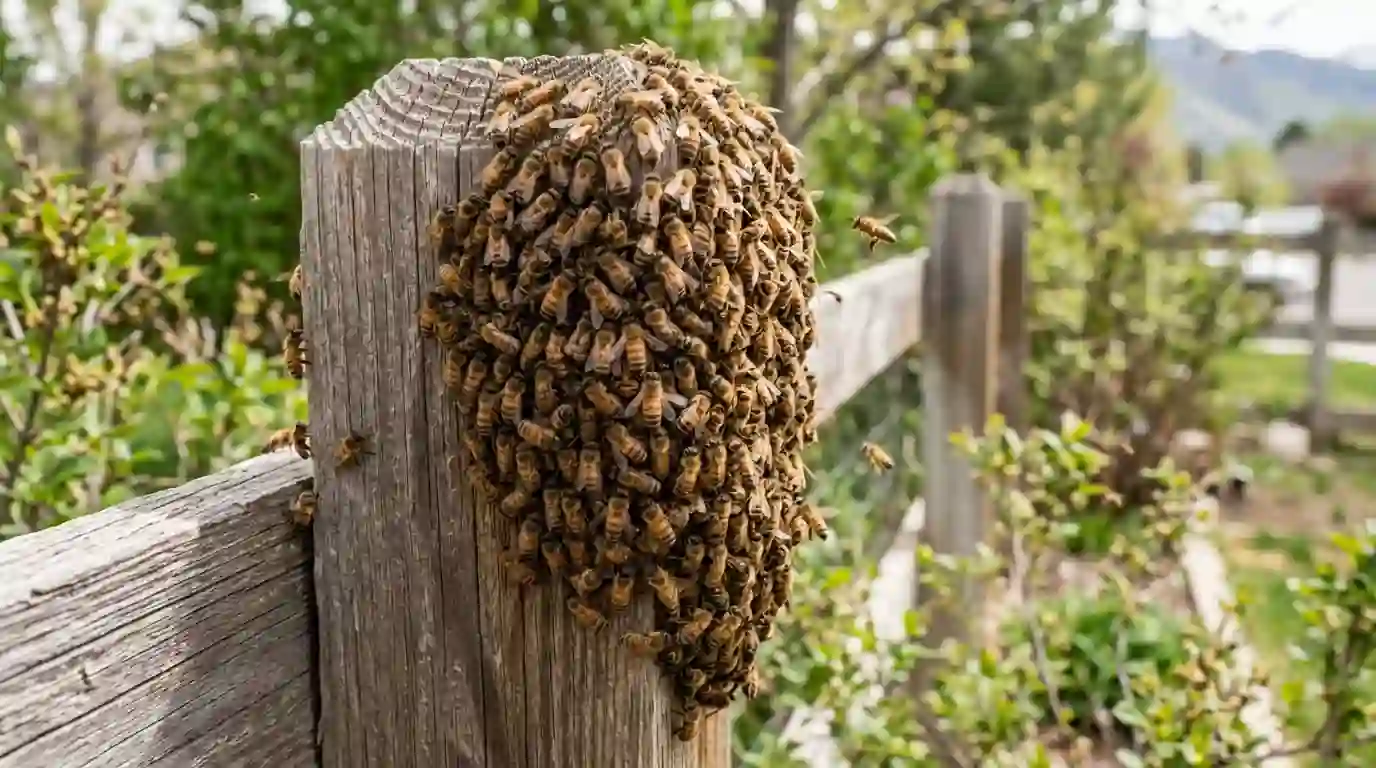
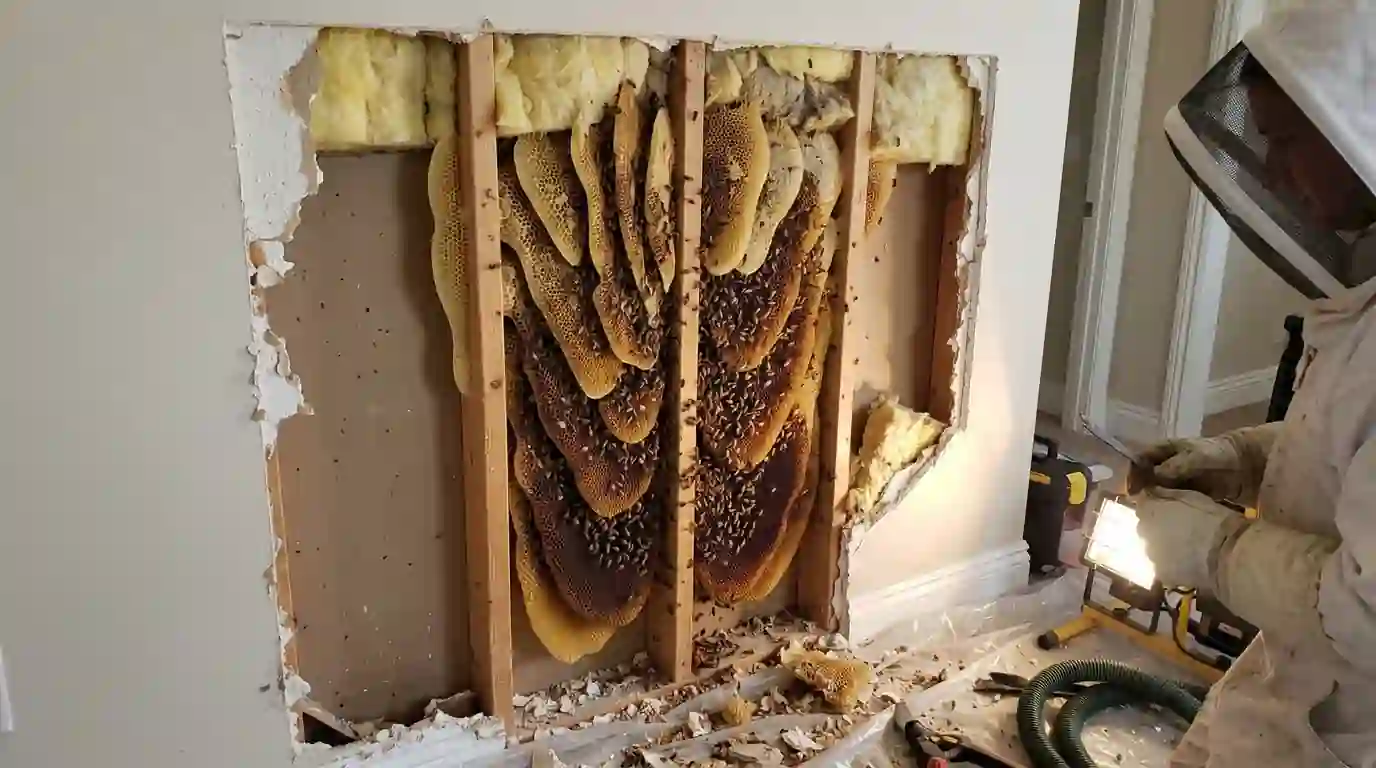
Honey bee removal depends on whether you have a swarm or a hive. A swarm is a cluster resting on a branch, fence or eave while scouts look for a home, often for a day or two. A hive is a colony that has moved into a wall, soffit or roofline and started building comb. Swarms can usually be collected alive. Hives need the bees and every piece of comb removed, or melting honey and leftover wax cause damage and draw pests.
At a glance
- Best for
- Swarms, hives in walls or eaves, bumble bee ground nests
- Peak season
- Spring and early summer swarms
- Approach
- Live removal first where the colony can be saved
- Key step
- All comb removed from walls to prevent later damage
Warning signs
Signs it's time to call
Sign 01
A cluster on a branch or fence
A swarm resting outside is easiest to collect before it moves into a wall.
Sign 02
Bees entering the siding or eaves
A steady line of bees into a gap means a colony is building comb inside.
Sign 03
Stains or sticky spots on walls
Honey seeping through drywall or siding means comb inside the wall.
Sign 04
Bees near a door or play area
Colonies near entries put people at risk of stings.
Sign 05
A ground nest in the lawn
Bumble bees sometimes nest in old rodent burrows near patios and paths.
Overview
Swarm or hive, and why it matters
In spring and early summer, honey bee colonies split and a swarm leaves with the old queen. It clusters on a branch, fence or eave while scouts search for a new cavity. A swarm is usually calm and can often be collected alive, which is the best outcome for everyone.
If the scouts pick a wall void, soffit or roof cavity on your house, the swarm moves in and starts building comb. Now it's an established hive. The bees have to come out, and so does every piece of comb, because leftover honey and wax melt, stain, ferment and attract rodents, ants and other bees.
Bumble bees are different again: small colonies in old rodent burrows, compost or insulation that die out in fall. We deal with them only where they're a real risk, like beside a door or a play area.
How the visit goes
How a bee removal goes
Identify what you have
Swarm, established hive or bumble bee nest, and exactly where it is.
Plan the removal
Live collection for swarms; for hives, locating the comb and planning access.
Remove the bees
Swarms are boxed; hive bees are removed with the comb they're on.
Remove the comb
Every piece of comb and honey taken out so nothing melts or draws pests.
Close the cavity
The entry gap is sealed and repair needs are noted once the space is clean.
What it covers
Bee work we do
Swarm collection
Clusters on branches, fences, mailboxes and eaves, collected before they move into the house.
Established hives in walls
Colonies in walls, soffits and rooflines, removed with their comb.
Comb removal before repairs
Clearing out comb and honey so drywall, siding or roofing can be repaired properly.
Bumble bee ground nests
Ground nests beside doors, paths and play areas, handled only where they're a real risk.
Salt Lake conditions
Honey bees in Utah
Utah has roughly 600 registered beekeepers managing about 30,000 honey bee colonies, and all beekeepers must register with the Utah Department of Agriculture and Food, whose county bee inspectors check hive health. USU Extension guidance also notes that African honey bees have been discovered in Utah and discourages beekeepers from collecting swarms that can't be immediately re-queened. That's one more reason a swarm on your fence is best handled by someone who knows what they're dealing with.
If a swarm is resting on a branch and you know a local beekeeper, they may want it. Either way, keep people and pets back and don't spray it.
Sources: extension.usu.edu, extension.usu.edu
Timing
How long it takes
- Swarm collectionUsually one visit, sometimes with a return to collect stragglers.
- Wall or eave hiveOne longer visit for bees and comb, depending on access.
- After removalA few foragers may return for a day or two; the sealed entry turns them away.
- RepairsDrywall, siding or trim can be repaired once the cavity is clean and dry.
Your options
Bee situations and the right response
| Situation | What it means | What we recommend |
|---|---|---|
| Swarm on a branch or fence | Bees resting while scouts search | Call soon; collection is easiest before they move in |
| Bees entering a wall | An established hive building comb | Removal of bees and comb, then sealing |
| Honey stains on a wall | Comb inside is melting or overloaded | Removal before damage spreads |
| Bumble bees in a burrow | A small seasonal colony | Leave it unless it's by a door or play area |
Do it yourself?
What to do, and what to avoid
What you can do today
- Keep people and pets away from a swarm or hive entrance.
- Note where bees are entering the house.
- Call early while a swarm is still outside.
- Plan for wall repair after a hive is removed.
What to leave alone
- Spraying a swarm or hive with insecticide, which leaves comb and honey to rot inside.
- Sealing the entrance while bees are inside.
- Knocking a swarm down with a hose.
- Letting anyone with a sting allergy near the bees.
Before we arrive
Before we arrive
- Keep people and pets away from the bees.
- Tell us where bees are entering or clustering.
- Note how long they've been there.
- Point out any stains or damp spots on walls.
- Clear access inside if the hive is in an interior wall.
- Unlock gates to the yard.
- Tell us about anyone with a sting allergy.
- Leave the bees undisturbed until we arrive.
Dusts, residual sprays and mosquito traps from product lines like these, chosen for the nest and the spot.
- Tempo
- Demand CS
- Suspend PolyZone
- Alpine WSG
- In2Care
- Gentrol
Cost
What bee removal costs
Swarms are quick; established hives take more work because the comb has to come out.
Published range
A general exterminator visit typically runs about $100 to $260; hive removals from walls take more time. Source: angi.com, checked September 2026.
Swarm or hive
A swarm on a branch is a short visit; a wall hive is a larger job.
Where the comb is
Walls, soffits and rooflines vary widely in access.
Size of the colony
Older hives hold more comb and honey.
Height and access
Two-story walls and rooflines need ladders or lifts.
Repairs afterward
Opening a wall means drywall or siding repair once the cavity is clean.
Catch the swarm before it moves in
A cluster on the fence today can be a hive in your wall tomorrow. An early call keeps it simple.
Call (801) 516-0135Spring swarms rest on branches and fences before choosing a home.
FAQ
Honey bee removal questions from Salt Lake homeowners
Still unsure? (801) 516-0135 is answered around the clock.
Often within a day or two, but it may move into your walls or roofline if scouts find a cavity there. Calling early keeps options open.
Live removal comes first wherever the colony can be saved. Colonies deep in walls or that pose a safety risk are handled case by case, and we'll explain before starting.
Left inside, honey and wax melt, stain walls, ferment and attract rodents, ants and other bees.
Not while bees are inside. They'll find another way out, sometimes into the house.
They're usually docile and their colonies die in the fall. We only remove them when a nest is right beside a door or play area.
Honey bees are fuzzy and golden-brown and build wax comb. Wasps and yellowjackets are smooth and shiny and build paper nests.
USU Extension notes African honey bees have been found in Utah. That's one more reason not to approach a swarm yourself.
Related services
More from wasps, bees & flying insects
From the Pest Library: Wasp, hornet and yellowjacket nests: Utah's late-summer season
Talk to us
Bees in the wall or a swarm on the fence?
Call now. A real person answers any hour and helps you keep everyone clear.
Homes, rentals and businesses across Salt Lake, Davis, Weber, Box Elder, Morgan, Tooele and Utah counties.
