Termites & wood destroyers
Carpenter ant control in Salt Lake City, UT
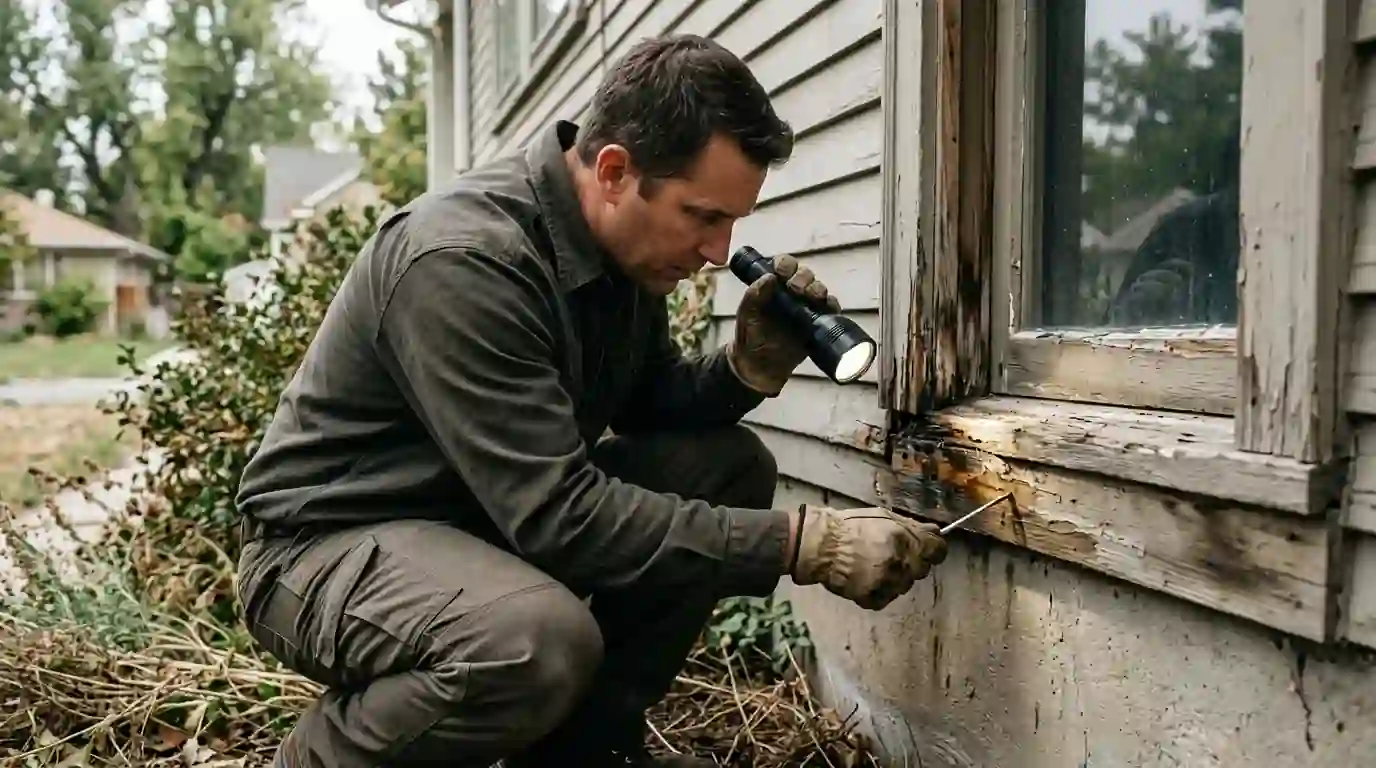
Big black ants in the kitchen at night, piles of sawdust-like frass under a window. Carpenter ants don't eat wood, but they carve nests in it, usually where it's damp.
Most active
- Spring
- Summer
- Fall
- Winter
Quick answer
Carpenter ants are large ants that carve nests in wood, usually wood softened by moisture: window frames, deck posts, roof edges, and wall voids near leaks. They leave smooth galleries and piles of frass, a sawdust-like mix with insect parts. Control means finding the parent nest outdoors and any satellite nests in the house, treating them directly, and fixing the moisture that drew them.
At a glance
- Best for
- Large ants indoors, frass piles and winged ants in spring
- Key step
- Finding the parent nest and satellite nests
- Root cause
- Damp or damaged wood
- Most active
- Spring and summer, often at night
Overview
Carpenter ants aren't termites, but they still matter
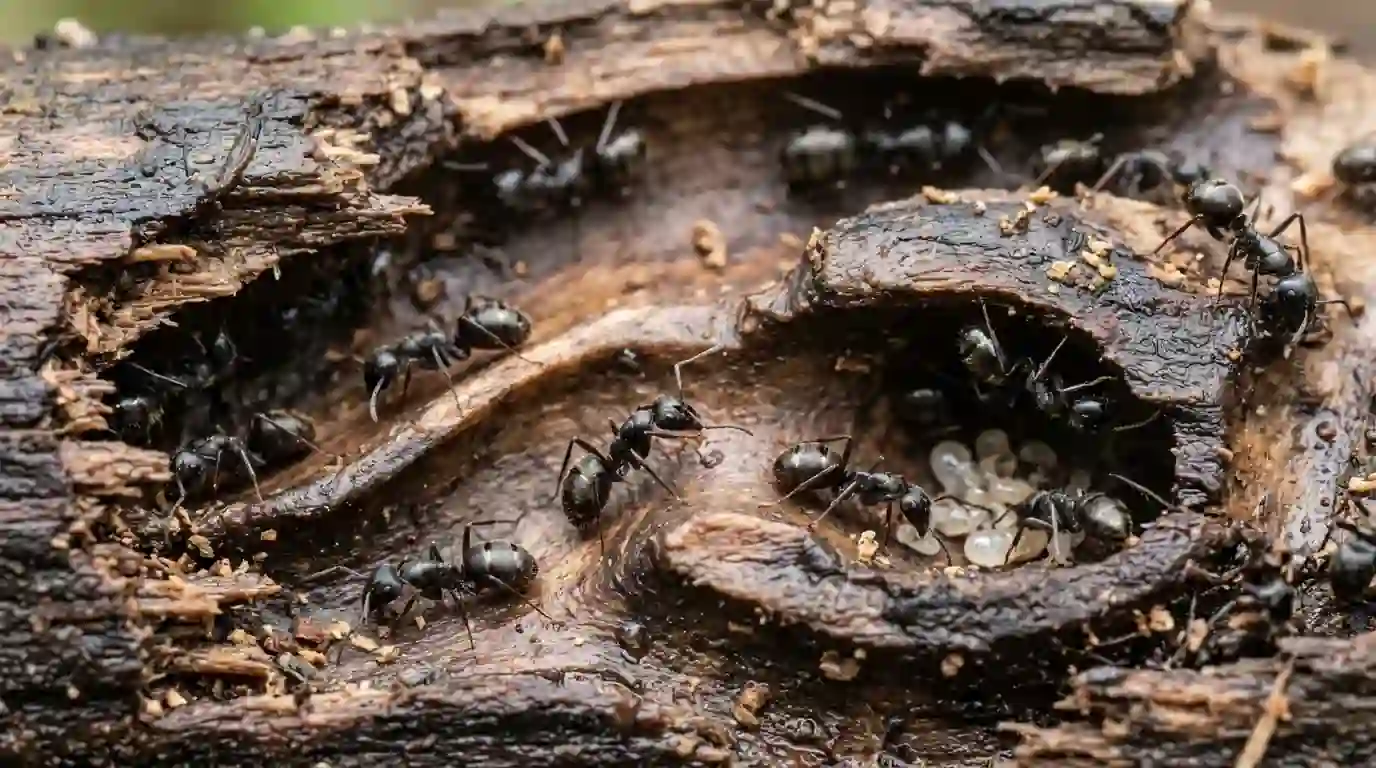
Carpenter ants don't eat wood. They tunnel through it to make nests, pushing the debris out as frass. Their galleries are smooth and clean, unlike termite galleries packed with mud.
A typical setup is a parent nest outdoors, in a stump, a rotting deck post or a tree, and satellite nests inside the house, often in damp wall voids near windows, doors, bathrooms or roof leaks. Workers travel between them at night, which is why people see large ants in the kitchen after dark.
Treatment targets the nests, not just the trails. We follow the ants to find the nests, treat them directly with dusts and baits, treat the entry points, and point out the moisture problems that made the wood attractive.
Your options
Carpenter ant treatment options
| Option | Best for | Trade-off |
|---|---|---|
| Direct nest treatment | Nests located in walls or wood | Nests must be found first |
| Baiting | Hidden nests and trails | Slower; workers carry bait back |
| Perimeter treatment | Ants entering from outside | Doesn't reach nests inside walls |
| Moisture repairs | Every case | Some repairs are on your side of the job |
Cost
What carpenter ant control costs
Usually priced like a targeted treatment, more if nests are hard to reach.
Published range
A general exterminator visit typically runs about $100 to $260. Source: angi.com, checked September 2026.
Nest location
Nests in open wood are quicker than nests deep in walls.
Number of nests
Satellite nests add time.
Outdoor parent nest
Stumps, trees and decks add exterior work.
Moisture issues
Leaks keep drawing ants back until fixed.
Follow-up
A second visit may be needed for large colonies.
What it covers
Carpenter ant problems we handle
Wood galleries and frass
Nests found by their frass and galleries, then treated directly.
Satellite nests in walls
Nests in damp wall voids near windows, doors, bathrooms and roofs.
Winged carpenter ants indoors
Spring swarms indoors, identified and traced to the nest.
Do it yourself?
What helps with carpenter ants
What you can do today
- Fix roof, window and plumbing leaks.
- Trim branches that touch the roof or siding.
- Remove old stumps and rotting wood near the house.
- Note where you see ants at night; it points to the nest.
What to leave alone
- Spraying the trail, which can split the colony.
- Stacking firewood against the house.
- Ignoring frass piles near windows or doors.
- Assuming carpenter ants are termites, or the other way round, without checking.
How the visit goes
How carpenter ant control goes
Identify
Confirm carpenter ants and check whether they're termites instead.
Find the nests
Follow trails, frass and moisture to satellite and parent nests.
Treat the nests
Dusts and baits applied directly into the nests.
Treat entry points
Perimeter treatment along trails and entry points.
Fix the conditions
Point out moisture, wood contact and branches that invite them.
Before we arrive
Before your treatment
- Note where and when you see ants, especially at night.
- Leave frass piles in place for us to see.
- Clear access to windows, doors and the attic.
- Tell us about leaks or water damage.
- Point out stumps, decks or trees near the house.
- Unlock gates to the yard.
- Keep pets away from treated areas.
- Save a winged ant if you've seen a swarm.
Warning signs
Signs of carpenter ants
Sign 01
Large black ants at night
Big ants in the kitchen or bathroom after dark.
Sign 02
Frass piles
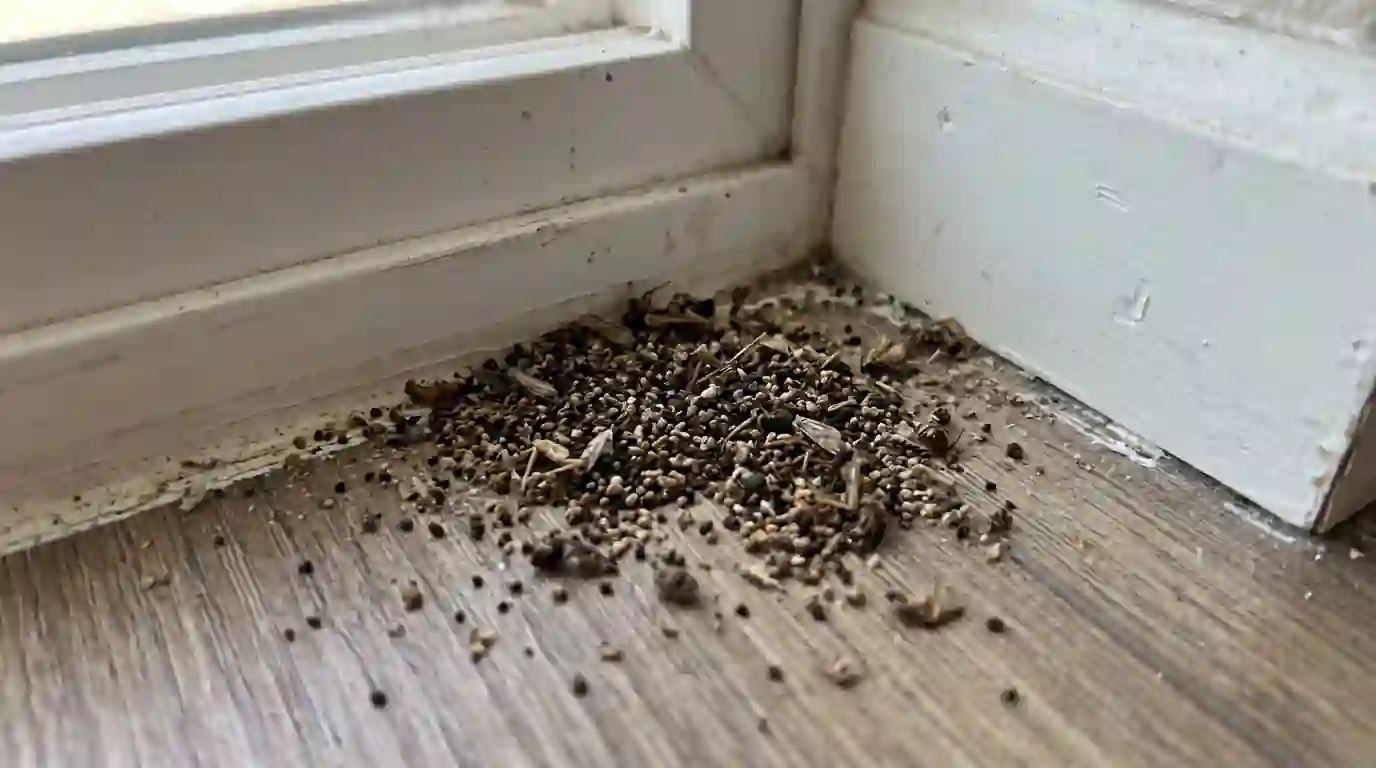
Sawdust-like piles with insect parts under windows, doors or baseboards.
Sign 03
Winged ants in spring
Large winged ants indoors mean a mature nest nearby.
Sign 04
Rustling in walls
Faint rustling in walls at night can be a nest.
Sign 05
Damp or damaged wood
Leaks and rot draw carpenter ants.
Salt Lake conditions
Carpenter ants or termites?
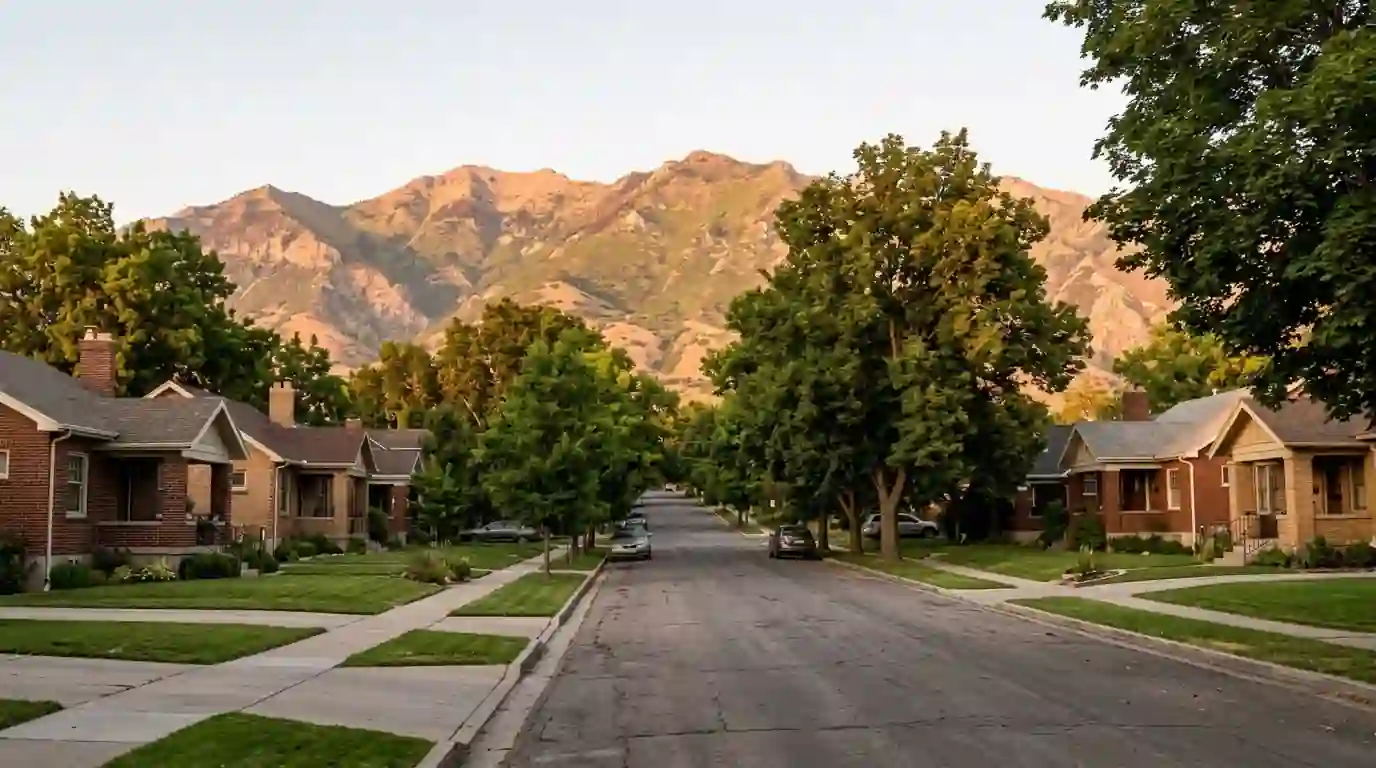
Winged carpenter ants and termite swarmers both show up in spring, and they're easy to confuse. In Utah, subterranean termites build mud tubes and can go unnoticed for one to eight years, while carpenter ants leave clean galleries and frass. Salt Lake City's older housing adds to the problem: the median home was built in 1965 and about a quarter predate 1940, so aging window frames, rooflines and decks can hold the damp wood carpenter ants prefer.
If you're unsure which you have, save a winged insect in a sealed bag and we'll identify it on the visit.
Sources: extension.usu.edu, point2homes.com
Termite work uses liquid soil treatments and bait systems from product lines like these.
- Termidor
- Sentricon
- Trelona
- Temprid
- Alpine WSG
Timing
How long it takes
- Same visitLocated nests are treated directly.
- One to two weeksActivity drops as baits reach hidden nests.
- Follow-upA second visit for remaining activity.
- Long termFixing moisture keeps them from returning.
Damp wood draws them in
Fix the leak, treat the nest, and carpenter ants have no reason to come back.
Call (801) 516-0135Carpenter ants nest in damp window frames, decks and rooflines.
FAQ
Carpenter ant control questions from Salt Lake homeowners
Still unsure? (801) 516-0135 is answered around the clock.
No. They carve nests in it and push out the debris as frass.
Carpenter ants have pinched waists and bent antennae and leave clean galleries; termites have straight waists and fill galleries with mud.
Carpenter ants forage mostly at night, traveling between nests and food.
Over time they can weaken damp or damaged wood, so nests should be treated and the moisture fixed.
It kills a few workers but not the nests, and can split the colony.
Outdoors in stumps, decks or trees, with satellite nests in damp walls, window frames or roof edges.
Damaged or damp wood should be repaired or replaced once the ants are gone.
Related services
More from termites & wood destroyers
From the Pest Library: Termite swarmers or flying ants? A spring identification guide
Talk to us
Big ants in the house at night?
Call now to find and treat the nest. A real person answers any hour.
Homes, rentals and businesses across Salt Lake, Davis, Weber, Box Elder, Morgan, Tooele and Utah counties.
