Pest Library
Termite swarmers or flying ants? A spring identification guide
A swarm of winged insects by the window in spring is alarming. Three quick checks tell you whether it's ants or termites, and what to do either way.
By Alvin Fairbanks, Pest Control Guides Editor
Updated September 2026 4 min read
Short answer
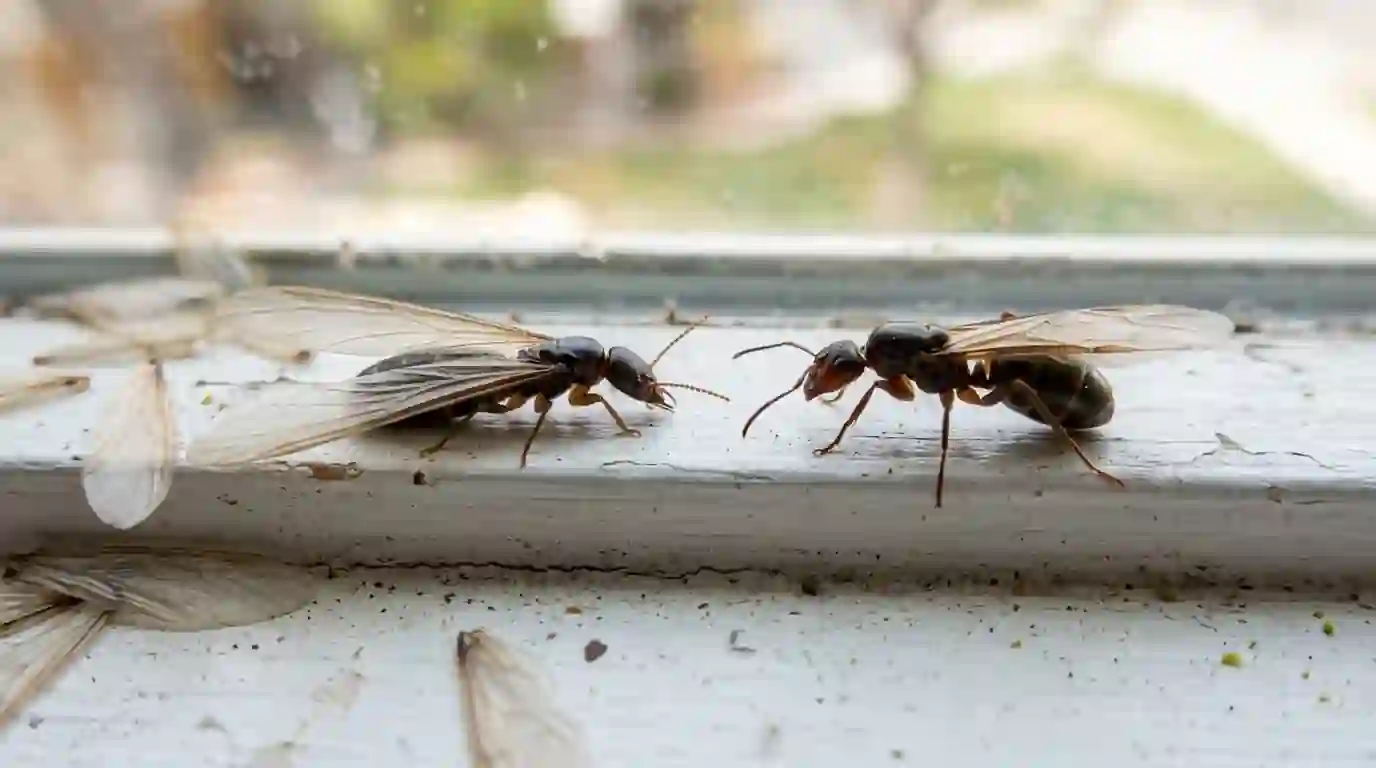
Look at three things: the waist, the antennae and the wings. Termite swarmers have a thick, straight waist, straight antennae and two pairs of equal-length wings that break off easily. Flying ants have a pinched waist, elbowed antennae and front wings longer than the back ones. Either way, a swarm indoors means a mature colony nearby, so save a few in a bag and call.
Why swarms happen in spring
Both termites and ants send out winged reproductives to start new colonies, usually on warm days after rain. Termite swarms in Utah are most often noticed in spring, and they're frequently the first sign a homeowner ever sees of a termite problem.
Three quick checks
You can usually tell them apart with a phone camera and a close look.
- Waist: termites are straight and thick; ants are pinched in the middle
- Antennae: termites are straight and beaded; ants are bent at an elbow
- Wings: termites have four equal wings; ants have longer front wings
- Shed wings: piles of equal-sized wings on sills point to termites
Three kinds of termites occur in Utah: dampwood, drywood and subterranean. Subterranean termites are the ones most homeowners deal with; they need wood-to-soil contact and build mud tubes to reach it. USU Extension notes that an infestation can go unnoticed for one to eight years and that homeowners usually notice termites for the first time when winged swarmers appear in spring. That's why a swarm is worth taking seriously even if you've never seen other damage.
What a swarm indoors means
Swarmers inside mean a mature colony is close, often in or under the house. For termites, that's a reason to have the foundation, crawlspace and any wood near soil inspected. For ants, it may be a colony in a wall void or under a slab.
What to do right now
Don't panic and don't spray everything. Swarmers themselves don't eat wood and die quickly indoors.
- Save a few winged insects in a sealed bag
- Vacuum up the rest
- Look along the foundation for mud tubes
- Call for an inspection
Carpenter ants and other look-alikes
Large black winged ants in spring are often carpenter ants, which nest in damp or damaged wood. They're not termites, but they point to a moisture problem worth fixing, and their nests need treating too.
Sources
No. The workers in the colony do. Swarmers are there to start new colonies.
Usually a short time on a single day, though more may appear over several days.
Vacuuming is enough. Save a few for identification and deal with the colony.
They can point to a colony in a wall or under a slab, and carpenter ants point to damp wood.
Pencil-width dirt tubes subterranean termites build to cross concrete to wood.
After any indoor swarm, and yearly for older homes.
Keep reading
More from the Pest Library
What pest control costs in Salt Lake City
Published price ranges for common jobs, and what moves a quote up or down.
Read the articlePest LibraryQuarterly pest plan or one-time treatment?
How to decide which fits your home, your pests and your budget.
Read the articlePest LibraryWindow wells: the Salt Lake basement's pest doorway
Spiders, earwigs and mice all use them. Covers, drainage and cleanup that help.
Read the articleTalk to us
Winged insects by the window?
Save a few and call. We'll identify them and inspect if it's termites.
Homes, rentals and businesses across Salt Lake, Davis, Weber, Box Elder, Morgan, Tooele and Utah counties.
