Wasps, bees & flying insects
Yellowjacket control in Salt Lake City, UT
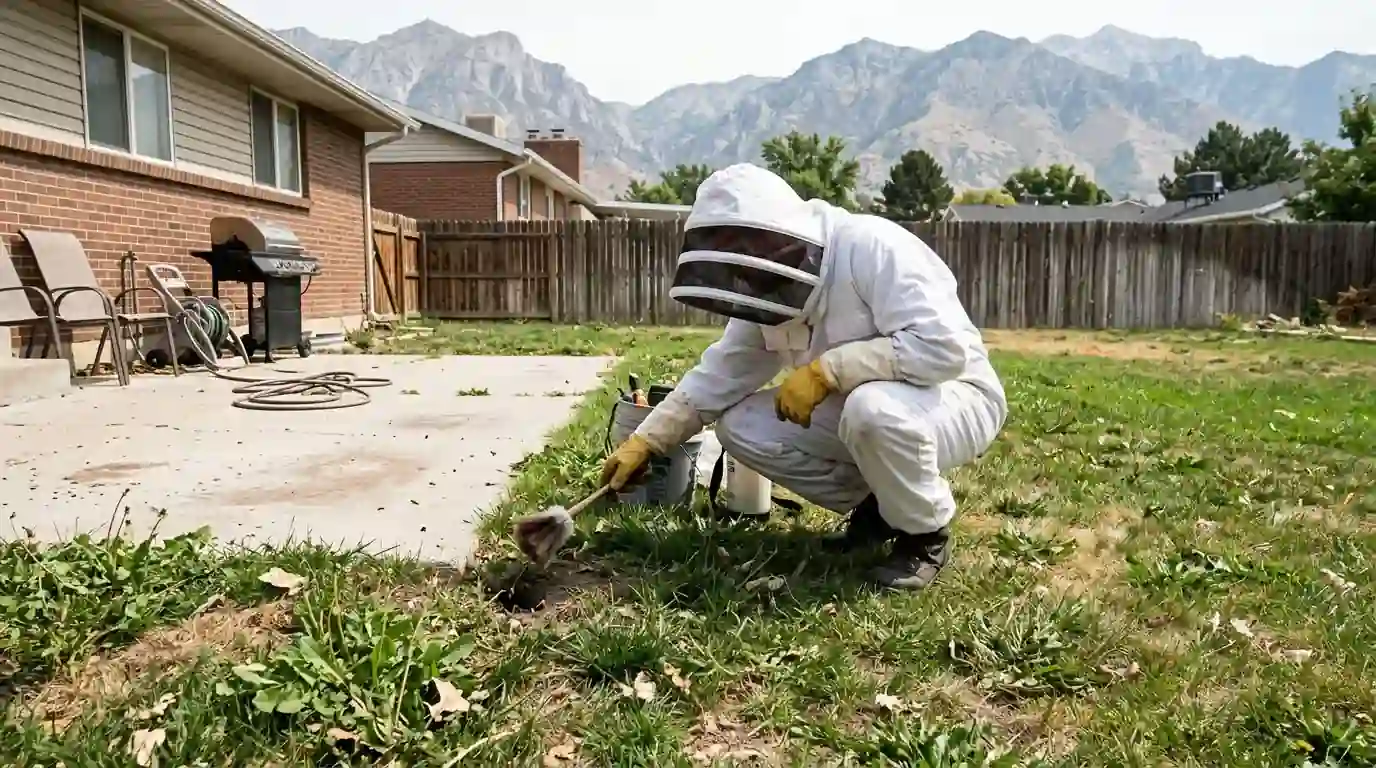
The mower hits a hole in the lawn and the yard fills with yellowjackets. Ground and wall nests are the ones behind most multiple-sting calls, and late summer is when they're biggest.
Most active
- Spring
- Summer
- Fall
- Winter
Quick answer
Yellowjackets in Utah usually nest in shallow chambers underground or inside wall voids, so the nest itself is hidden. By late summer colonies are large and defensive, and foragers crowd patios, trash cans and picnic tables. We treat the nest through its entrance with a fast-acting dust, then use lures and traps to thin foragers if they keep coming.
At a glance
- Best for
- Ground nests, wall-void nests and yellowjackets at patios
- Peak season
- Late summer into early fall
- Response
- Call any hour; ground nests near paths get priority
- Follow-up
- Traps and baits for foraging pressure
Warning signs
Signs of a yellowjacket nest
Sign 01
Steady traffic at a hole in the ground
Wasps flying in and out of a hole in the lawn, a bed or under a step is a ground nest.
Sign 02
Wasps entering a wall gap
A steady line into siding or a soffit means a nest in the void.
Sign 03
Yellowjackets swarming food and trash
Heavy foraging around patios in late summer points to nests nearby.
Sign 04
Stings while mowing or weeding
Stings around lawn equipment usually mean a ground nest was disturbed.
Sign 05
Worse by late August
Colonies peak late in the season, when they're largest and most aggressive.
Overview
Why yellowjackets are the most dangerous nest in the yard
Unlike paper wasps, yellowjackets hide their nests. In Utah they usually build in shallow chambers in the ground, under steps and landscape rock, or inside wall voids and attics. You don't see the nest until someone steps on it or runs the mower over it.
By late summer a colony can be large, and the workers defend it hard, stinging repeatedly. That's why yellowjacket nests account for so many multiple-sting calls in August and September.
Treatment goes right into the entrance: a dust that workers carry into the nest, reaching the colony in the chamber. For heavy foraging around patios and outdoor eating areas, the right lures in traps thin the numbers, but they don't replace treating the nest.
How the visit goes
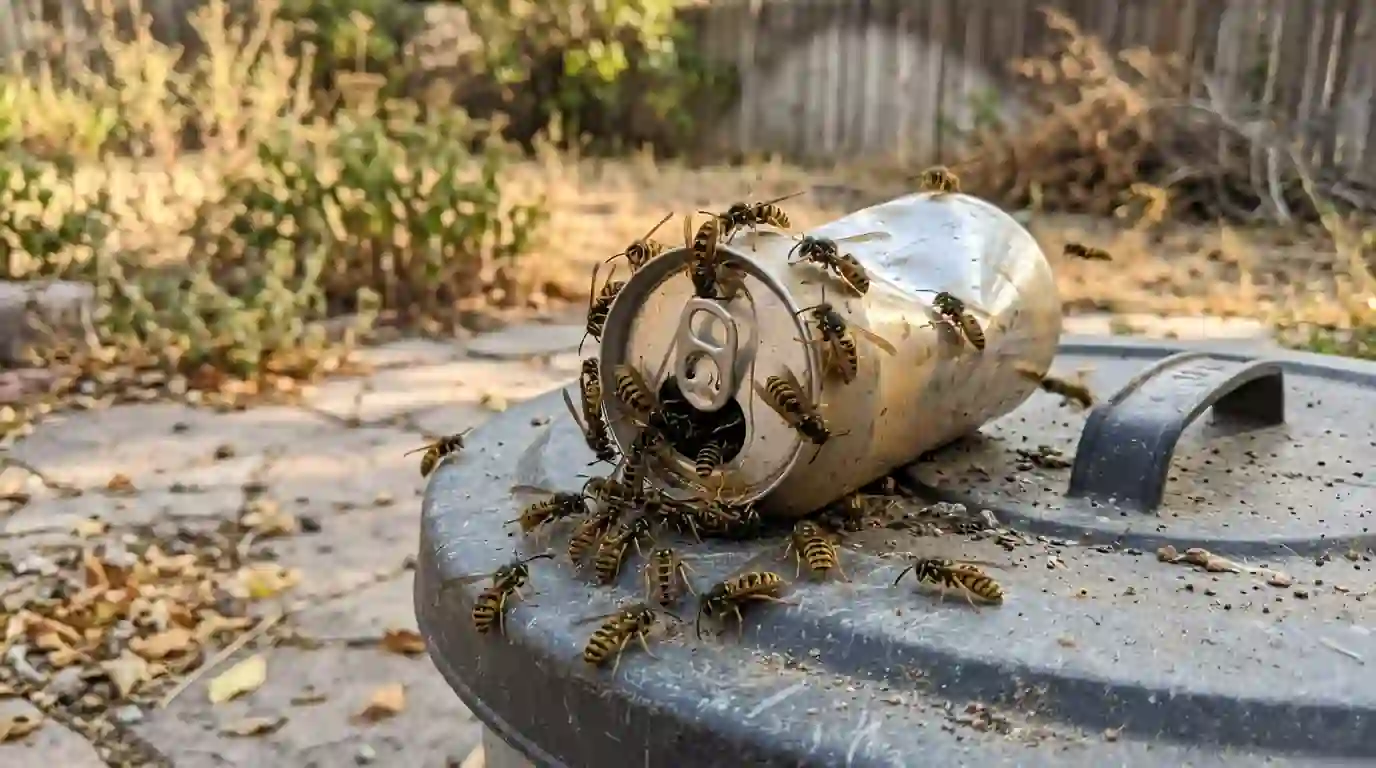
How yellowjacket control goes
Find the entrance
Watch the flight line to locate ground or wall entrances.
Protect the area
Keep people and pets well back, and mark the spot.
Treat the nest
Dust into the entrance so workers carry it into the colony.
Check back
Confirm activity has stopped, then seal wall entrances.
Thin foragers
Lures and traps placed away from patios if foraging pressure stays high.
What it covers
Yellowjacket work we do
Ground nests in lawns
Nests in lawns, beds, under steps and landscape rock, treated through the entrance.
Nests in wall voids
Treatment through the gap, then sealing once the colony is gone.
Late-summer foraging swarms
Help around patios, pools and outdoor kitchens where foragers crowd food.
Trapping and baiting
Lure-baited traps placed to draw foragers away from people.
Salt Lake conditions
Utah yellowjackets and what draws them
In Utah, yellowjackets usually build their nests in shallow underground chambers, while bald-faced hornets hang paper nests in trees and paper wasps nest under eaves across the state. USU Extension points out that yellowjackets respond to heptyl butyrate lures rather than the fruit-juice baits that draw paper wasps, which is why a trap set for the wrong wasp catches almost nothing. Getting the species right matters for traps and for treatment.
Keep garbage cans lidded and drinks covered outdoors from August on, when foraging peaks.
Sources: wildaboututah.org, extension.usu.edu
Timing
How quickly it settles
- Same eveningTraffic at the treated entrance drops as workers carry dust inside.
- One to two daysThe colony dies off; stragglers may circle the entrance.
- Next visit if neededWall entrances are sealed once activity stops.
- Rest of the seasonTraps keep foragers down around outdoor eating areas.
Your options
Yellowjacket options
| Option | Best for | Trade-off |
|---|---|---|
| Nest treatment | Any known ground or wall nest | Needs the entrance located first |
| Lure-baited traps | Foragers around patios | Thins numbers, doesn't remove the nest |
| Void sealing | Wall nests after treatment | Only once the colony is dead |
| Seasonal prevention | Homes with repeat nests | Ongoing visits in spring and summer |
Do it yourself?
What you can do
What you can do today
- Mark any hole you see yellowjackets using and keep people away.
- Keep trash cans lidded and outdoor food covered.
- Pick up fallen fruit from trees.
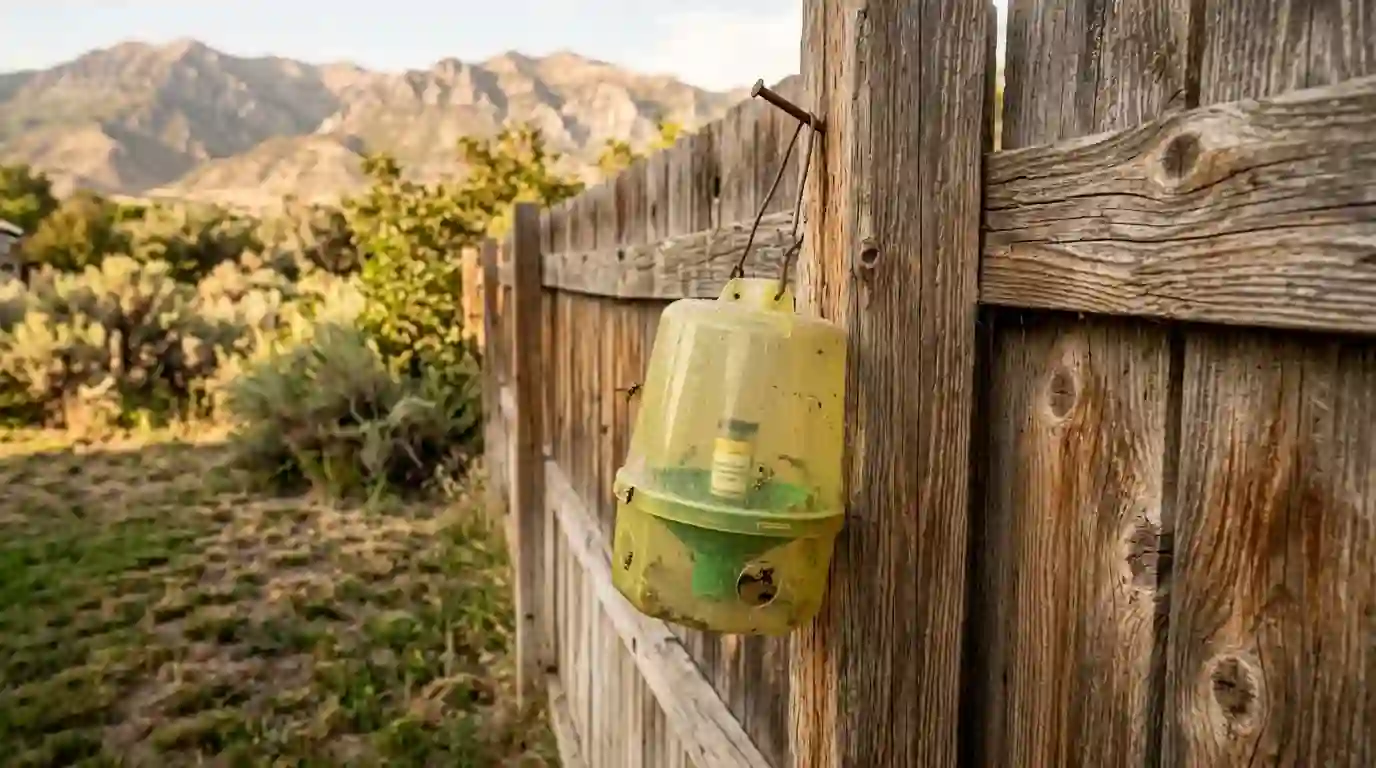
- Hang heptyl butyrate lure traps away from where people sit.
What to leave alone
- Pouring gasoline or other fuels into a nest, which is dangerous and pollutes the soil.
- Blocking a ground or wall entrance while the nest is active.
- Mowing over an area where you've seen traffic.
- Swatting at yellowjackets near food, which draws more.
Before we arrive
Before we arrive
- Keep everyone away from the nest area.
- Mark the entrance with a flag or stick from a distance.
- Put pets inside.
- Don't mow or water near the nest.
- Unlock gates to the yard.
- Tell us about anyone with a sting allergy.
- Note where foragers gather most.
- Plan an evening visit if the nest is busy in the day.
Dusts, residual sprays and mosquito traps from product lines like these, chosen for the nest and the spot.
- Tempo
- Demand CS
- Suspend PolyZone
- Alpine WSG
- In2Care
- Gentrol
Cost
What yellowjacket control costs
Priced by the nest and how hard it is to reach.
Published range
A general exterminator visit typically runs about $100 to $260. Source: angi.com, checked September 2026.
Nest location
Open lawn nests are quicker than nests under decks, rock or inside walls.
Number of nests
Several nests on one lot add time.
Colony size
Late-season colonies are larger and need more care.
After-hours calls
Evening and overnight visits can cost more.
Traps and follow-up
Trapping programs and wall sealing add to the job.
Hidden nests, busy yards
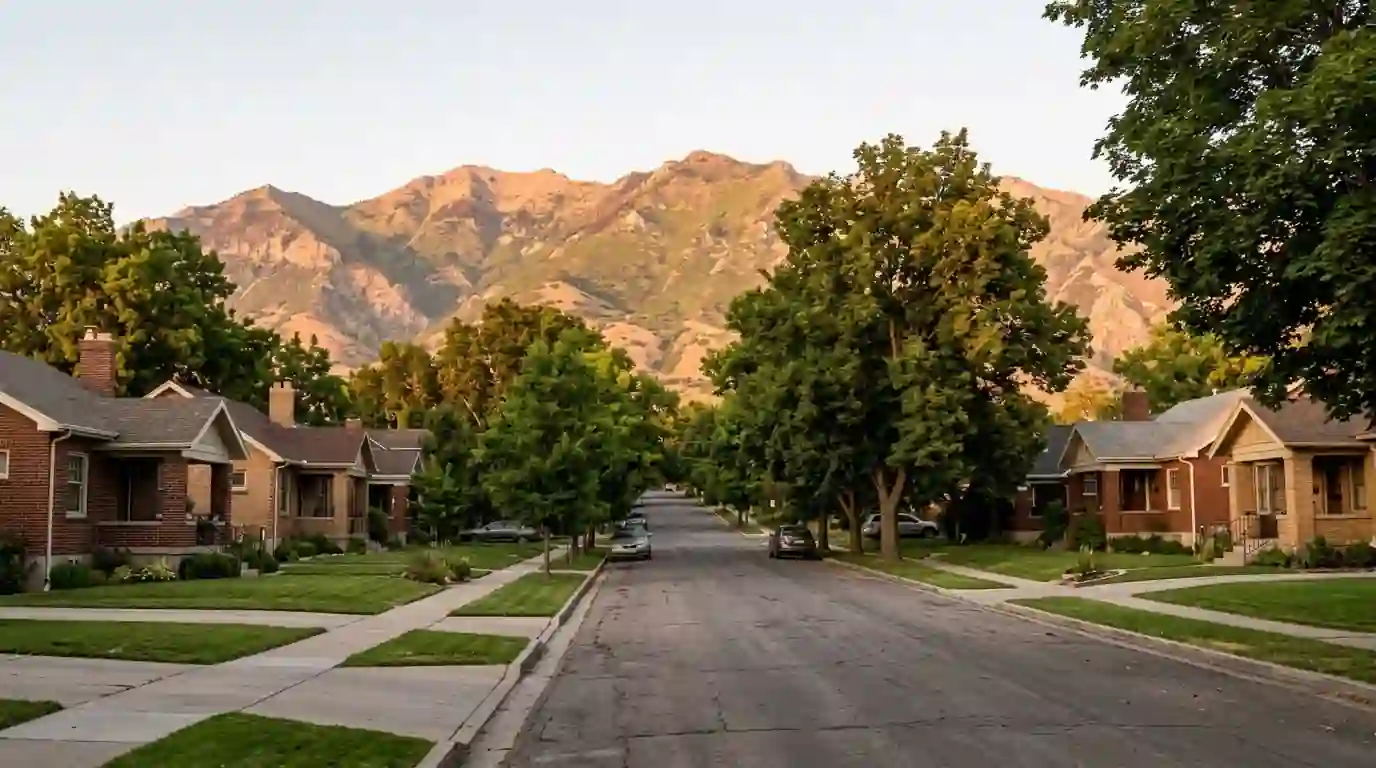
Most yellowjacket nests are underground or inside walls. Watch the flight line and keep people back.
Call (801) 516-0135Yellowjackets nest in shallow holes in lawns and beds.
FAQ
Yellow jacket control questions from Salt Lake homeowners
Still unsure? (801) 516-0135 is answered around the clock.
They're a type of wasp. They nest in the ground or in walls and are usually the most defensive around Salt Lake homes.
Watch where yellowjackets fly low to the ground and disappear. The entrance is often a small hole in the lawn, a bed or under a step.
Colonies grow all season and peak in late summer, when workers forage hard for sugar and protein.
Traps with heptyl butyrate lures thin foragers, but they don't remove the nest. Treating the nest is what stops it.
No. Water rarely reaches the chamber, and fuel is dangerous and pollutes the soil. Keep people away and call us.
The colony dies off in winter, but new queens start nests each spring, sometimes nearby.
Yes. Evenings are often the best time, when the colony is inside the nest.
Related services
More from wasps, bees & flying insects
From the Pest Library: Wasp, hornet and yellowjacket nests: Utah's late-summer season
Talk to us
Yellowjackets coming out of the lawn?
Call now. A real person answers any hour and helps you stay clear until we arrive.
Homes, rentals and businesses across Salt Lake, Davis, Weber, Box Elder, Morgan, Tooele and Utah counties.
