Mice, rats & lawn rodents
Mouse control in Salt Lake City, UT
Scratching in the ceiling at night, droppings in the drawer, a chewed cereal box. Mice move in as the nights turn cold, and they don't leave on their own.
Most active
- Spring
- Summer
- Fall
- Winter
Quick answer
Mouse control in Salt Lake City means three things at once: trapping the mice already inside, finding the gaps they used to get in, and sealing or scheduling the sealing of those gaps. House mice nest in walls, attics and kitchens; deer mice favor garages, sheds and cabins and are the main carrier of hantavirus in Utah, so droppings need careful handling.
At a glance
- Best for
- Mice in kitchens, garages, attics and wall voids
- Most active
- Fall through winter
- How it works
- Trapping inside, stations outside and sealing entry gaps
- Visits
- Usually two or more to trap and check
Warning signs
Signs mice have moved in
Sign 01
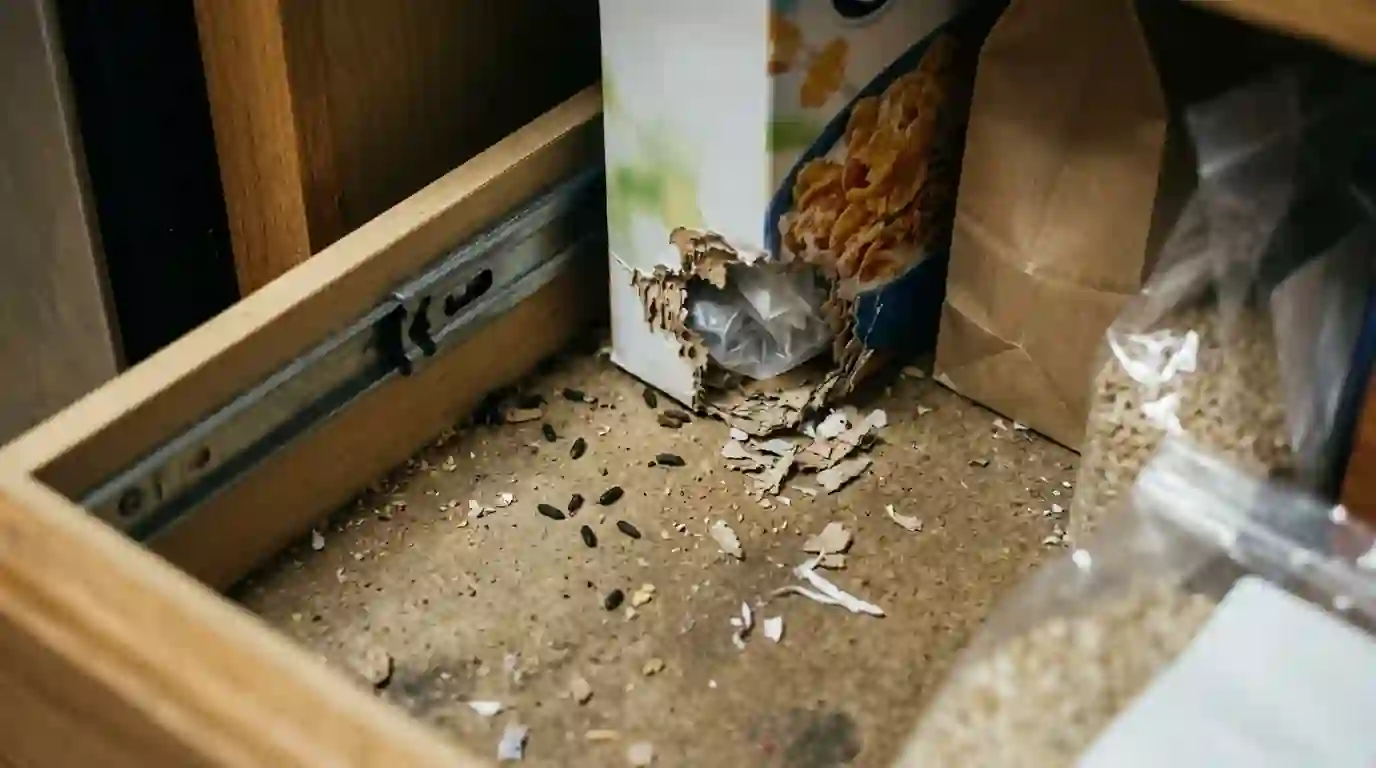
Droppings in drawers or cabinets
Small, dark, rice-sized droppings under sinks, in drawers and along walls.
Sign 02
Scratching at night
Scurrying or scratching in ceilings and walls after dark.
Sign 03
Chewed packages
Gnawed cereal boxes, pet food bags and bird seed.
Sign 04
Nests in storage
Shredded paper, insulation or fabric balled up in boxes, drawers or the garage.
Sign 05
A musty urine smell
A stale smell in closed spaces like the garage or pantry.
Overview
Why mice are a fall and winter problem here
Mice live outdoors most of the year, but as nights cool they look for warmth, food and shelter, and a house offers all three. They can squeeze through a gap the size of a dime: the corner of a garage door, a gap around a pipe or cable, a weep hole or a torn vent screen.
Once inside they nest in wall voids, attics, insulation, garages and the back of cabinets, and they breed quickly. A single mouse seen in October can mean a dozen by the holidays.
Effective mouse control combines trapping the mice already inside with finding the entry points. Traps without sealing just make room for the next mouse. Sealing without trapping can trap mice inside the walls.
How the visit goes
How a mouse job goes
Inspect
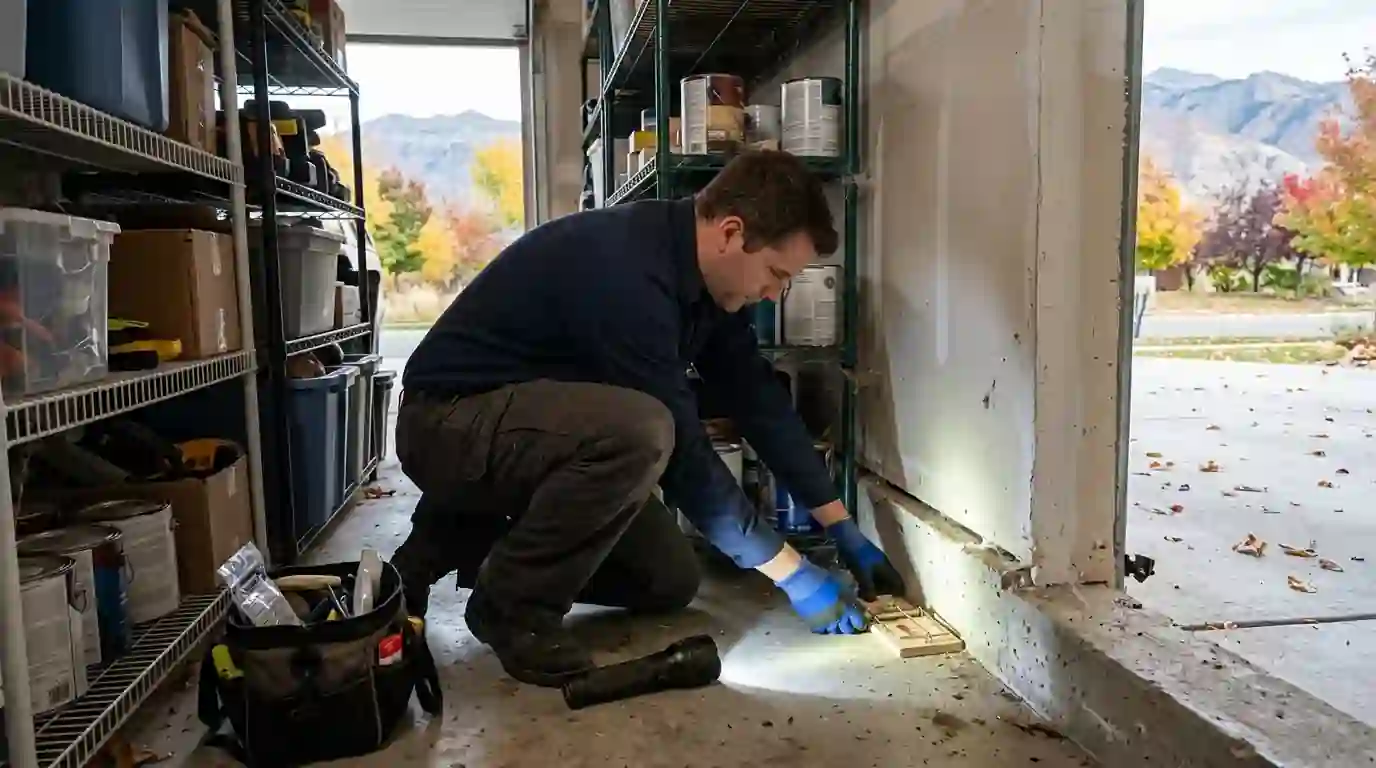
Kitchen, garage, attic, crawlspace and the exterior, looking for droppings, runways and gaps.
Trap inside
Snap traps placed along walls and runways, out of reach of kids and pets.
Stations outside
Tamper-resistant stations along the foundation where needed.
Find the gaps
Garage seals, pipe and cable gaps, vents and rooflines checked and noted.
Check and seal
Return visits to clear traps, then sealing once the activity stops.
What it covers
Mouse problems we handle
House mice
Mice in kitchens, walls and attics, trapped and traced to their entry points.
Deer mice
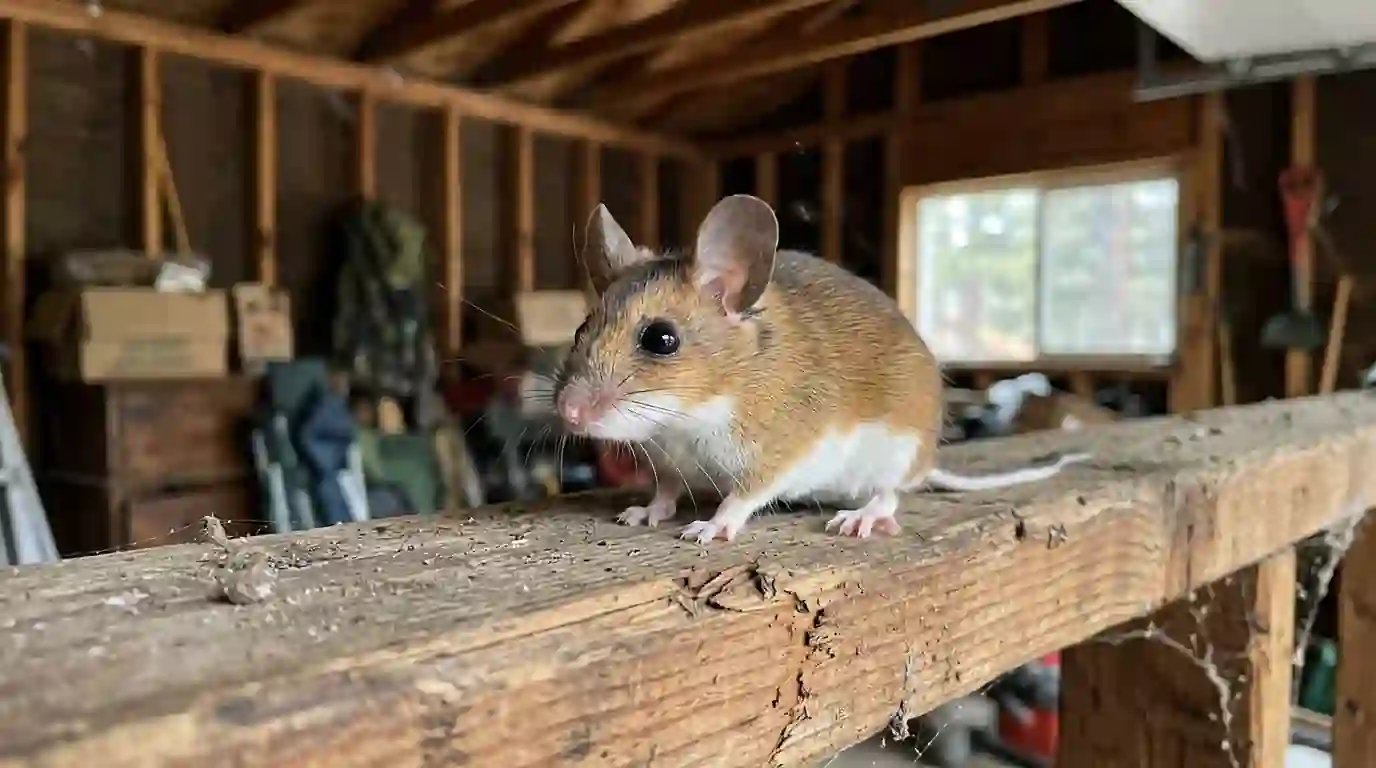
White-bellied mice in garages, sheds and cabins, handled with care because of hantavirus.
Garage and attic activity
Traps and exclusion for the spaces where mice nest out of sight.
Trapping programs
Scheduled checks until the traps stay empty and the gaps are sealed.
Salt Lake conditions
Mice, the first freeze and hantavirus
Salt Lake City's average first freeze falls around October 20, and that's when mouse calls climb. Over winter rodents shelter in cool, dark places like garages, cabins and storage units, which is why spring cleanup is when Utahns tend to be exposed to hantavirus. Utah sees roughly one human case a year, fatal in up to 60 percent of cases, and state epidemiologists say never to sweep or vacuum rodent droppings.
If you find droppings, wet them with disinfectant before wiping them up, or leave the cleanup to us.
Timing
How long mouse control takes
- First few daysMost active mice are caught in the first traps.
- One to two weeksReturn visits clear traps and reset them where activity continues.
- SealingGaps are sealed once trapping shows the mice are gone.
- Next fallA check before the first freeze keeps them out.
Your options
Mouse control options
| Option | Best for | Trade-off |
|---|---|---|
| Snap trapping | Mice inside the living space | Needs return visits to check and reset |
| Exterior bait stations | Pressure from outside | Doesn't reach mice already inside |
| Exclusion | Stopping new mice | Works best after trapping |
| All three together | Most homes | The most thorough approach |
Do it yourself?
What helps, and what to avoid
What you can do today
- Store food, pet food and bird seed in sealed containers.
- Keep garage doors closed, especially at dusk.
- Clear clutter from garages and storage areas.
- Wet droppings with disinfectant before cleaning them up.
What to leave alone
- Sweeping or vacuuming droppings.
- Using loose poison bait indoors, where mice can die in the walls.
- Sealing gaps while mice are still inside.
- Leaving pet food out overnight.
Before we arrive
Before we arrive
- Note where you've seen droppings or heard noise.
- Leave droppings in place for now.
- Clear access to under sinks and the garage walls.
- Open access to the attic and crawlspace.
- Put pet food and bird seed in sealed containers.
- Keep pets away from trap areas.
- Unlock gates for the exterior inspection.
- Tell us about any cabin or shed with activity.
Rodent programs use tamper-resistant stations and bait blocks from product lines like these, placed where children and pets cannot reach them.
- Protecta
- Contrac
- Advion
- Temprid
- Tempo
Cost
What mouse control costs
Priced by how many areas need trapping and how much sealing is needed.
Published range
A general exterminator visit typically runs about $100 to $260; trapping programs and sealing add to it. Source: angi.com, checked September 2026.
How many areas
Kitchen only is simpler than kitchen, attic and garage.
Return visits
Trapping programs need checks until activity stops.
Sealing work
More gaps mean more exclusion time.
Attic and crawlspace access
Hard-to-reach spaces take longer.
Cleanup
Heavy droppings may need separate cleanup and sanitizing.

A dime-sized gap is all it takes
Mice squeeze through the smallest gaps as nights cool. Trapping and sealing together is what keeps them out.
Call (801) 516-0135Garage door corners and pipe gaps are common mouse entry points.
FAQ
Mouse control questions from Salt Lake homeowners
Still unsure? (801) 516-0135 is answered around the clock.
Through gaps as small as a dime: garage door corners, pipe and cable gaps, vents, weep holes and rooflines.
Usually one means more. Mice breed quickly, so it's worth acting early.
We rely on traps inside, so mice don't die in walls. Tamper-resistant stations are used outside where needed.
Deer mice are the main carrier of hantavirus in the region. Avoid stirring up droppings and let us handle heavy contamination.
Most are caught in the first week or two, with return visits until traps stay empty.
Yes, once trapping shows the mice are gone, so none are trapped inside.
Cooler nights push them indoors looking for warmth and food, especially around the first freeze.
Related services
More from mice, rats & lawn rodents
From the Pest Library: Mice and the first freeze: sealing a Salt Lake home in October
Talk to us
Hearing mice in the walls?
Call now to start trapping and sealing. A real person answers any hour.
Homes, rentals and businesses across Salt Lake, Davis, Weber, Box Elder, Morgan, Tooele and Utah counties.
