Pest Library
Mice and the first freeze: sealing a Salt Lake home in October
Mice start testing your house as the nights cool, and the first freeze is the deadline. Here's where they get in and how to close the doors in time.
By Alvin Fairbanks, Pest Control Guides Editor
Updated September 2026 4 min read
Short answer
Mice squeeze through gaps about the size of a dime, and in Salt Lake City they push inside hardest as nights cool toward the average first freeze around October 20. Check garage door corners, pipe and cable gaps, weep holes, vents and the roofline, seal them with metal-based materials, and trap any mice already inside before you seal.
Why October matters
Mice live outside most of the year. When nights turn cold, they look for warmth, food and shelter, and a house offers all three. Sealing in September and early October gets ahead of that push.
A single mouse inside in October can mean a family by the holidays, so the timing is worth getting right.
Salt Lake City's average first freeze falls around October 20, based on 1991 to 2020 normals, and that date lines up with the jump in mouse calls every fall. The city's housing stock makes the job bigger: the median home was built in 1965 and about a quarter of homes predate 1940, so settled foundations, older garage doors and gaps around original utility lines are common. Those are the first places to check.
Where mice get in
The gaps are smaller than most people expect. If a pencil fits, a young mouse probably can too.
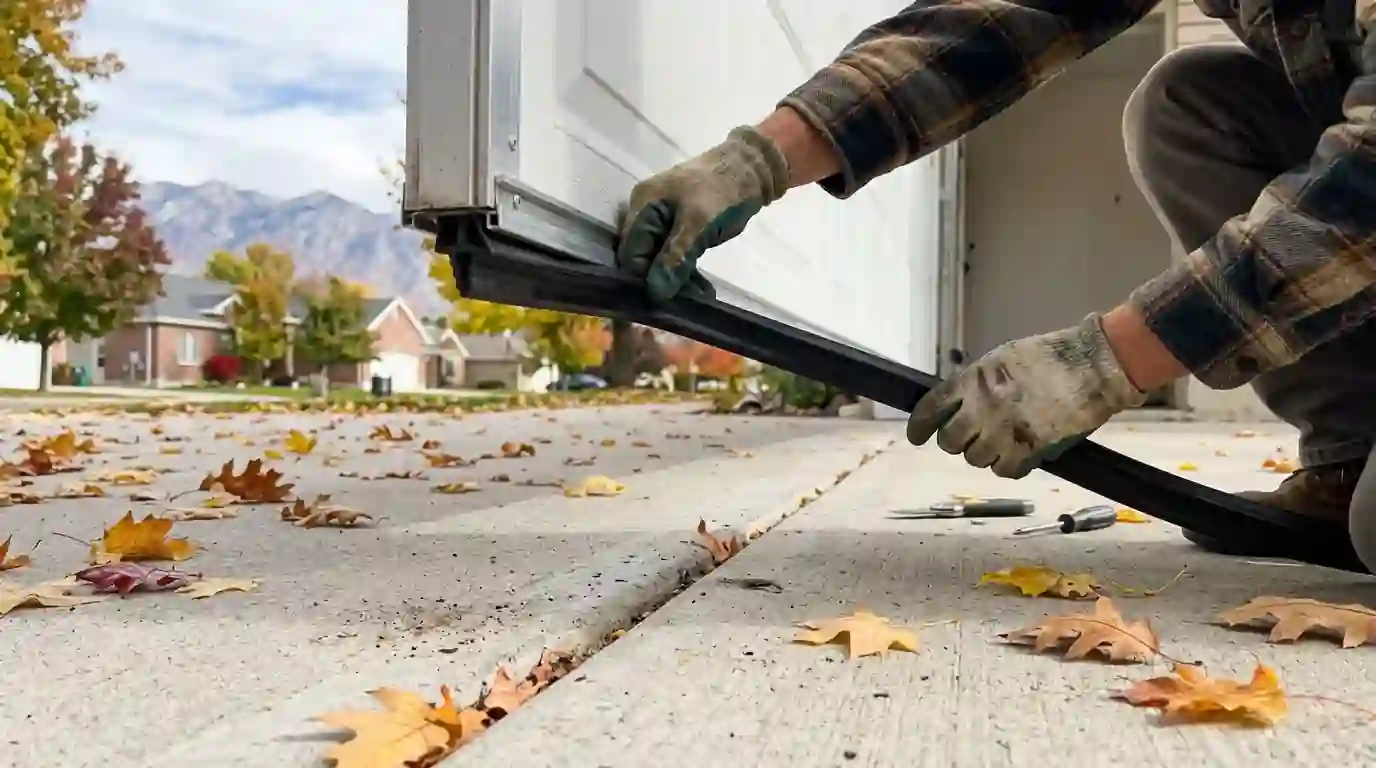
- Corners and bottom seal of the garage door
- Gaps around pipes, cables, AC lines and dryer vents
- Weep holes and gaps at the foundation
- Crawlspace and attic vents with torn screens
- Gaps where siding meets the roofline
Room-by-room checklist
Walk the house with a flashlight. In the garage, look for daylight under the door and droppings along the walls. In the kitchen, check under the sink where pipes enter. In the basement, look along the sill plate and around utility lines. In the attic, look for droppings and shredded insulation near the eaves.
Materials that hold up
Mice chew through spray foam, caulk and plastic. Use steel or copper mesh packed into gaps with sealant over it, hardware cloth over vents, and new door sweeps and garage door seals. Foam can finish a job but shouldn't be the only barrier.
If they're already inside
Seal too early and you trap mice in the walls, where they die and cause odors. Trap first with snap traps along walls and runways, then seal once the traps stay empty. Avoid loose poison indoors for the same reason.
- Trap first, seal second
- Wet droppings with disinfectant before cleaning them up
- Never sweep or vacuum droppings
- Store pet food and bird seed in sealed containers
Sources
About the size of a dime, roughly what a pencil fits through.
Not on its own. Mice chew through it. Use metal mesh with sealant.
September to early October, before the first freeze.
Trap first. Sealing with mice inside traps them in the walls.
Wet them with disinfectant first and never sweep or vacuum them.
They aren't a reliable substitute for sealing gaps and trapping.
Keep reading
More from the Pest Library
Cleaning up mouse droppings safely in Utah
Why you never sweep or vacuum droppings, and the wet-cleanup method that is safer.
Read the articlePest LibraryWindow wells: the Salt Lake basement's pest doorway
Spiders, earwigs and mice all use them. Covers, drainage and cleanup that help.
Read the articlePest LibraryQuarterly pest plan or one-time treatment?
How to decide which fits your home, your pests and your budget.
Read the articleTalk to us
Want the gaps found and sealed before the freeze?
Call now to book rodent exclusion. A real person answers any hour.
Homes, rentals and businesses across Salt Lake, Davis, Weber, Box Elder, Morgan, Tooele and Utah counties.
