Pest Library
Bed bug heat treatment vs chemical treatment
Both methods work when done properly. The difference is time, prep and cost. Here's how to decide which fits your home.
By Alvin Fairbanks, Pest Control Guides Editor
Updated September 2026 4 min read
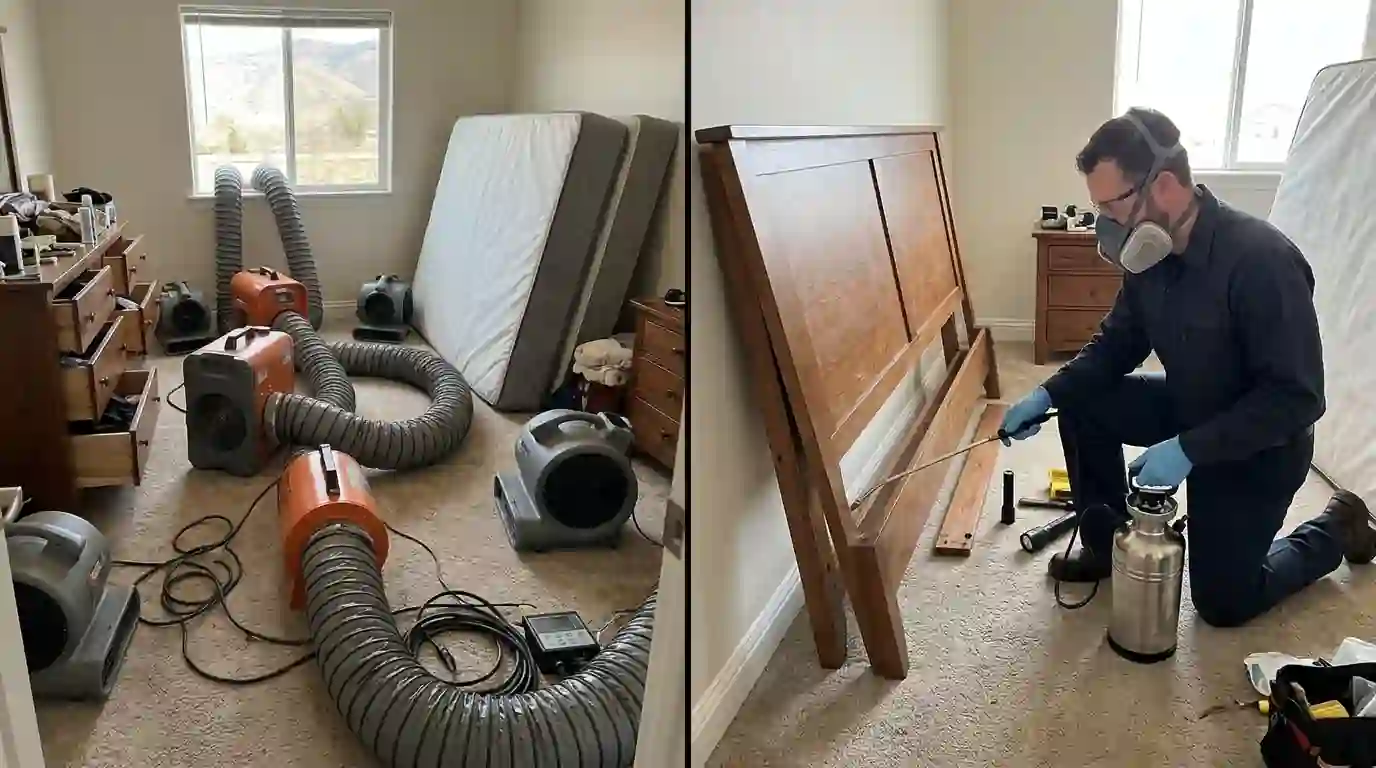
Short answer
Heat treatment raises rooms to a lethal temperature and holds it for hours, killing bed bugs and eggs in one long visit. Conventional treatment uses residual products, dusts and a growth regulator over two or three visits, because most products don't kill eggs. Heat is faster but needs more prep and usually costs more up front; conventional is slower but cheaper per visit.
How heat treatment works
Portable heaters and fans bring each room up to a temperature that kills every life stage, then hold it while heat soaks into mattresses, furniture, walls and clutter. Temperature probes in the hardest-to-heat spots confirm it worked.
How conventional treatment works
A technician treats seams, frames, furniture joints and voids with residual products and dusts, adds a growth regulator and returns about two weeks later, and again if needed, to catch bugs that hatched after the first visit.
Side by side
Neither method is magic. Both depend on a careful inspection and treating every hiding spot.
- Heat: usually one long visit, kills eggs directly, more prep
- Conventional: two or three visits, less prep per visit, lower cost per visit
- Both: encasements and interceptors help catch survivors
- Both: a follow-up inspection confirms the job is done
Virginia Tech entomologists point out that bed bug heat treatment results depend on the heating system, the size of the structure, how long active heating runs, air movement from fans and the focused attention of a trained technician, and that many homes cannot be treated properly in a short four-hour window. In Salt Lake City, where about 20 percent of housing units sit in buildings of 50 or more units, that planning also has to include the units next door.
Prep for each
Heat prep means removing anything that melts or is pressurized, like candles, aerosols and some medications, and opening drawers and closets. Conventional prep means laundering and bagging bedding and clothes and clearing clutter so the technician can reach every seam and baseboard.
Apartments and shared walls
In apartment buildings, bed bugs move between units through shared walls and outlets. Whichever method you choose, the neighboring units need to be checked or the problem comes back.
Sources
Heat is usually one long visit; conventional takes two or three visits over several weeks.
Heat usually costs more up front. Published ranges for bed bug treatment run about $350 to $5,000 depending on size and method.
Yes, when the right temperature is held long enough everywhere.
Usually not. Treatment plus an encasement saves most mattresses.
For conventional treatment, usually yes once surfaces dry. For heat, plan to be out most of the day.
Yes, if hiding spots were missed or neighbors are infested, which is why follow-ups matter.
Keep reading
More from the Pest Library
What pest control costs in Salt Lake City
Published price ranges for common jobs, and what moves a quote up or down.
Read the articlePest LibraryQuarterly pest plan or one-time treatment?
How to decide which fits your home, your pests and your budget.
Read the articlePest LibraryCleaning up mouse droppings safely in Utah
Why you never sweep or vacuum droppings, and the wet-cleanup method that is safer.
Read the articleTalk to us
Weighing heat or chemical?
Call and we'll talk through which fits your home and your timeline.
Homes, rentals and businesses across Salt Lake, Davis, Weber, Box Elder, Morgan, Tooele and Utah counties.
